Mexican Cuisine
Mexican cuisine is far more than the tacos and burritos many travelers know from restaurants abroad. It is one of the world’s oldest continuously evolving culinary traditions, built on ingredients that have been cultivated in Mesoamerica for thousands of years. Recognized by UNESCO as an Intangible Cultural Heritage of Humanity, Mexican food reflects the country’s history, geography, and social life. This page introduces you to the foundations of Mexican cooking, its essential dishes, regional differences, and practical tips for eating well during your trip.
What Makes Mexican Cuisine Unique
At its core, Mexican cuisine rests on three ancestral ingredients: corn, chili peppers, and beans. Corn is transformed into masa, a dough used to make tortillas, tamales, and dozens of other preparations. This trio was already the base of the local diet long before the Spanish arrived, and it remains the backbone of everyday meals today.
The colonial period added a second layer: pork, beef, chicken, dairy products, rice, and spices from Asia and Europe. Rather than replacing indigenous traditions, these new ingredients merged with them, creating a hybrid cuisine that is constantly reinventing itself. This is why a dish like mole, a complex sauce combining dried chilies, chocolate, nuts, and spices, can exist at the crossroads of two culinary worlds.
Another defining trait is the importance of technique. Traditional Mexican cooking involves processes such as nixtamalization, where corn is cooked and soaked in an alkaline solution to improve its flavor and nutritional value. Fresh masa made this way tastes noticeably different from industrial tortillas, and many travelers cite their first fresh tortilla as a revelation.
Essential Dishes Every Visitor Should Know
Mexican cuisine is vast, but a handful of dishes and preparations form a common foundation. Knowing them will help you read menus with confidence and order like a local.
Tacos and Their Many Variations
The taco is the most famous expression of Mexican cooking, yet it is often misunderstood. In Mexico, a taco is simply a tortilla folded around a filling, and the variety is enormous:
- Tacos al pastor: marinated pork cooked on a vertical spit, inspired by Lebanese immigrants, typically served with pineapple, onion, and cilantro.
- Tacos de barbacoa: meat, usually lamb or goat, slow-cooked until tender, often steamed overnight.
- Tacos de carnitas: pork braised in its own fat, a specialty of the state of Michoacán.
- Tacos de pescado: battered fish tacos, a coastal specialty particularly associated with Baja California.
A helpful analogy: thinking that all tacos are the same is like thinking all sandwiches are the same. The filling, the salsa, and even the time of day matter. In many cities, there are taco stands for breakfast, others for lunch, and others for late night.
Mole, Tamales, and Celebration Foods
Certain dishes are tied to festivities and family gatherings. Mole, often served at weddings and holidays, exists in countless regional versions, from the dark and complex mole poblano of Puebla to the green mole of Oaxaca. Tamales, steamed parcels of masa filled with meat, vegetables, or sweet fillings, are a classic breakfast item sold from street carts, traditionally accompanied by a warm corn-based drink called atole.
Everyday Staples
- Antojitos: « little cravings, » a family of street snacks including quesadillas, sopes, and tlacoyos.
- Pozole: a hearty hominy soup with pork or chicken, garnished tableside with lettuce, radish, lime, and chili.
- Ceviche and aguachile: fresh raw fish or seafood cured in lime, popular on both coasts.
- Chiles en nogada: poblano chilies stuffed with meat and fruit, covered in a walnut cream sauce, a patriotic dish associated with independence celebrations.
A Cuisine of Regions
One of the most common mistakes travelers make is treating Mexican food as a single cuisine. In reality, the country is a mosaic of regional traditions shaped by climate, history, and local ingredients. A few examples illustrate this diversity:
- Oaxaca is often called the culinary heartland, famous for its seven styles of mole, its string cheese known as quesillo, its mezcal, and its markets filled with unusual chilies and herbs.
- Yucatán has its own distinct identity, influenced by Mayan traditions and Caribbean trade. Signature dishes include cochinita pibil, pork marinated in achiote and sour orange and slow-cooked in a pit, and sopa de lima.
- Puebla claims mole poblano and chiles en nogada, and its cuisine reflects a strong Spanish influence.
- Northern Mexico favors beef, flour tortillas instead of corn, and grilled meats, reflecting its ranching culture.
- Baja California leads the country’s modern food movement, combining Mediterranean-style agriculture with fish tacos and local wines from the Guadalupe Valley.
If your itinerary allows it, plan at least one meal that is typical of the region you are visiting rather than defaulting to international or familiar options. This is often the most memorable part of a trip.
Salsas, Chilies, and the Question of Spice
Many first-time visitors worry that everything in Mexico is extremely spicy. The truth is more nuanced. Chilies are used to build flavor as much as heat, and many are dried, toasted, and blended into sauces that are mild and aromatic. Dishes are usually served with salsas on the side, so you control the level of spice yourself.
A few practical points will help you navigate heat levels:
- Taste the salsa carefully first. A small spoonful on the back of your hand or the edge of the plate lets you gauge the heat before committing.
- Know the common chilies. Jalapeño and serrano are moderately hot; habanero, common in the Yucatán, is significantly hotter; poblano and ancho are mild.
- Neutralize, don’t just drink water. Dairy, lime, and starchy sides like rice or tortillas calm the burn better than plain water.
Restaurateurs and street vendors are generally happy to guide you. Simply asking « ¿es picante? » (is it spicy?) is understood everywhere.
Eating Like a Local: Street Food and Markets
The soul of Mexican cooking lives in its markets and street stalls, not only in restaurants. Markets such as Mercado Merced in Mexico City or Mercado 20 de Noviembre in Oaxaca offer an immersion into ingredients and prepared foods at once. Street food is generally safe when you follow a few sensible habits:
- Choose stalls with a steady flow of local customers, which indicates high turnover and fresh ingredients.
- Look for vendors who cook food to order rather than keeping it sitting at ambient temperature.
- Prefer setups where tortillas are warmed on the comal in front of you.
- Carry small bills, as most stalls are cash only.
Consider a fictive example: a traveler in Guadalajara who eats only at hotel restaurants may leave with the impression that Mexican food is heavy and repetitive. A second traveler who spends a morning at the market sampling birria, a slow-cooked spiced beef stew, followed by fresh fruit sprinkled with chili and lime, comes home with a completely different picture. The difference is not luck; it is where you choose to eat.
Drinks That Complete the Meal
Mexican beverages deserve as much attention as the food. Beyond the obvious, several drinks are deeply rooted in daily life:
- Agua fresca: light, refreshing waters flavored with hibiscus (jamaica), rice and cinnamon (horchata), or fresh fruit.
- Mezcal and tequila: agave-based spirits, traditionally sipped slowly rather than shot, often accompanied by orange slices and sal de gusano.
- Pulque: a fermented agave drink with pre-Hispanic origins, experiencing a revival among younger urban drinkers.
- Café de olla: coffee brewed with cinnamon and piloncillo, unrefined cane sugar, in clay pots.
Practical Tips for Your Culinary Journey
Before closing, here is a short checklist to make the most of Mexican cuisine during your stay:
- Eat where locals eat, especially for street food and breakfast.
- Try one dish per region you visit rather than repeating the same safe choice.
- Visit at least one traditional market, ideally in the morning when produce is freshest.
- Say yes to homemade salsas, but start with small quantities.
- If you have dietary restrictions, learn a few key phrases; vegetarian options are increasingly available, though traditional dishes often contain lard or chicken broth.
- Book a cooking class or market tour if you want to understand ingredients beyond what a menu can teach.
Mexican cuisine rewards curiosity. Each tortilla, each salsa, and each regional specialty carries centuries of history, and the best way to appreciate it is simply to taste widely and ask questions. Whether you are planning your first trip or your fifth, there is always another dish waiting to change how you think about this remarkable food culture.
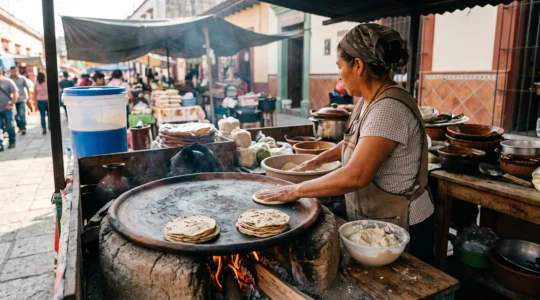
How Clay Griddles Change the Taste of Mexican Street Food and Where You’ll Actually Find Them
A tortilla lifted from a dark earthen griddle can look deceptively simple: a few toasted freckles, a soft curve and a faint cloud of steam. Yet the surface beneath it tells a story about Mexican maize, regional cooking traditions and…
Lire la suite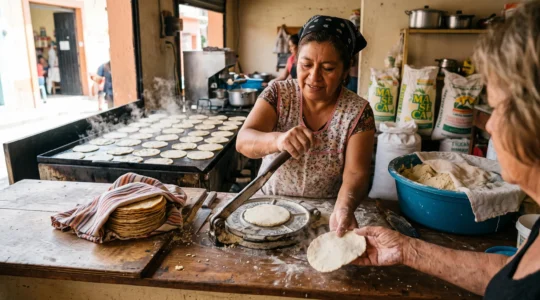
Why Tortillas Taste Completely Different in Mexico When They’re Made From Nixtamalised Maize
The first properly fresh corn tortilla you taste in Mexico can be surprisingly different from anything labelled a tortilla in a British supermarket. It may smell distinctly of maize, feel soft enough to fold around a filling without splitting, and…
Lire la suite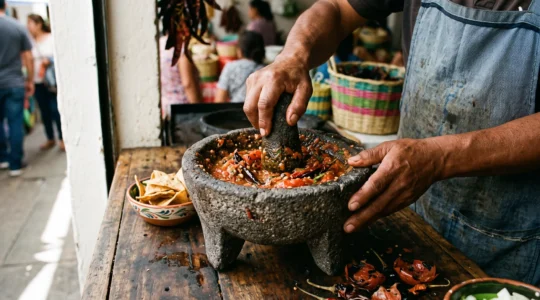
How to Find Real Molcajete-Style Salsas in Mexico Without Falling for Tourist Theatre
A stone mortar arriving at your table in Mexico does not necessarily mean the salsa inside was ground by hand. Some kitchens prepare their sauces in advance and serve them in a traditional molcajete. Others genuinely crush roasted chillies, tomatoes…
Lire la suite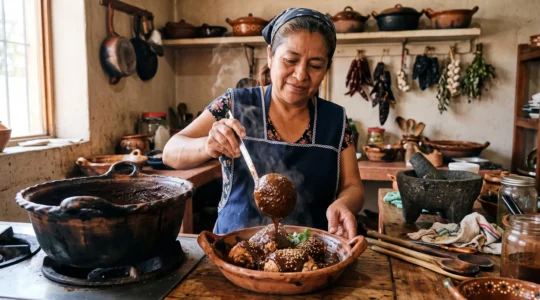
Which Slow-Simmered Mexican Sauces Should You Try First if You Don’t Know Mole From Salsa ?
Ordering mole in Mexico can feel surprisingly complicated. One restaurant serves a dark, velvety sauce over chicken; another offers a bright green preparation with herbs; a third lists several unfamiliar varieties without explaining how they differ. None is necessarily more…
Lire la suite