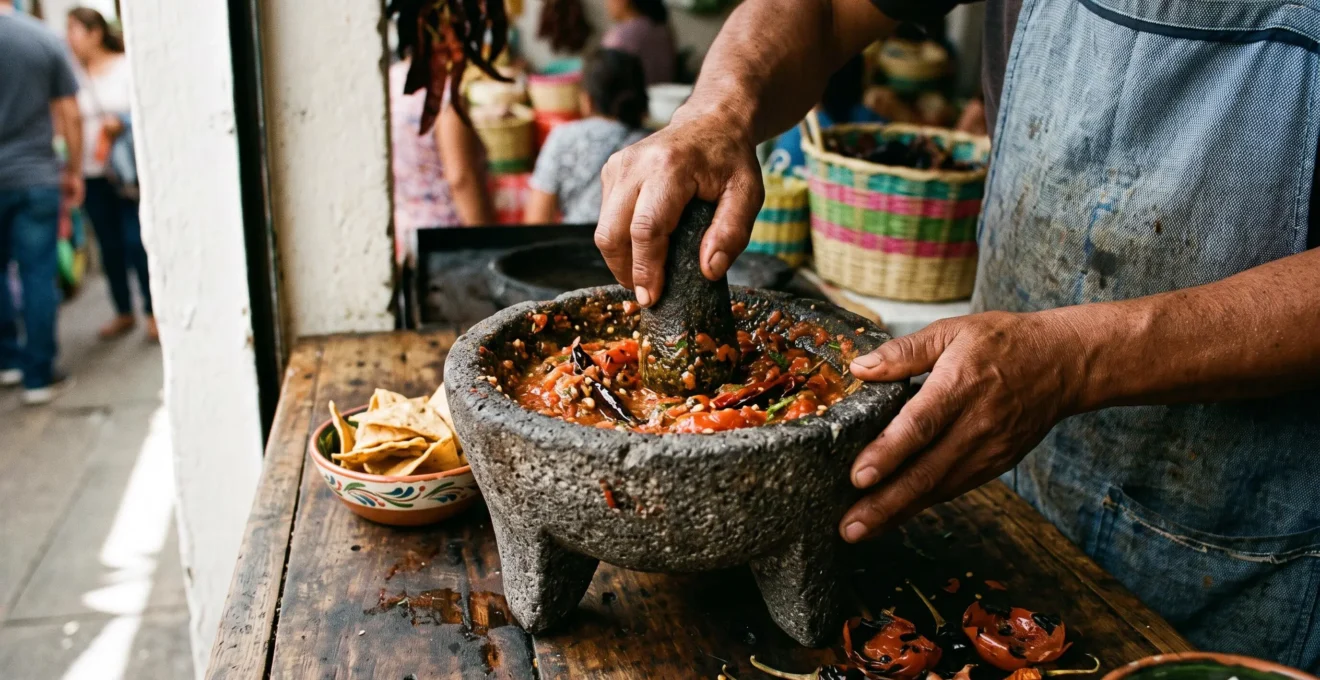
A stone mortar arriving at your table in Mexico does not necessarily mean the salsa inside was ground by hand. Some kitchens prepare their sauces in advance and serve them in a traditional molcajete. Others genuinely crush roasted chillies, tomatoes and garlic with a stone pestle, sometimes finishing the mixture with a blender.
For travellers seeking traditional Mexican flavours, the distinction matters because the preparation method changes texture, ingredient distribution and the eating experience. Yet authenticity cannot be judged from the serving vessel alone.
The most useful approach is to examine how ingredients are roasted, watch for actual grinding, ask a specific preparation question and assess food hygiene separately. A busy market stall may offer a fascinating demonstration of everyday cooking, while a restaurant with an experienced kitchen may deliver equally convincing flavours without preparing every salsa at the table.
Knowing what to look for makes it easier to appreciate the craft without confusing a theatrical presentation with evidence of quality.
How to recognise worthwhile molcajete salsa
- Look for visible crushing and irregular texture, but remember that neither proves an entirely hand-ground preparation.
- Judge cooking technique and hygiene independently: fresh-looking salsa is not necessarily microbiologically safe.
- Ask about roasted ingredients, chilli varieties and preparation timing rather than relying on the presence of a stone bowl.
- Why Does Salsa Made in a Volcanic Stone Mortar Taste Deeper Than Blender Salsa?
- How to Tell if a Salsa Was Really Made in a Stone Mortar Using 3 Quick Clues
- Which Is More Reliable for Molcajete Flavour: Street Stalls or Sit-Down Restaurants?
- The Food Safety Mistake People Make When Chasing Stone-Mortar Salsa in Mexico
- When Should You Order Molcajete-Style Salsa So It’s Fresh, Not Dull and Bitter?
- Why Do Roasted Chilli Salsas Taste Smokier but Sometimes Feel Hotter After 3 Bites?
- Why Do Clay Griddles Create a Different Toasted Flavour Than Metal in Mexican Cooking?
- How Clay Griddles Change the Taste of Mexican Street Food and Where You’ll Actually Find Them
Why Does Salsa Made in a Volcanic Stone Mortar Taste Deeper Than Blender Salsa?
Salsa prepared in a volcanic stone molcajete can taste more complex because its rough surface crushes ingredients instead of rapidly chopping them into a uniform liquid. This produces a distinctive texture and combines roasted flavours without necessarily destroying every recognisable piece of chilli or tomato. The depth comes from both ingredient preparation and grinding technique, not from a proven flavour-enhancing property of volcanic stone itself.
A traditional molcajete is a Mexican stone mortar, commonly made from volcanic rock, used with a matching pestle called a tejolote. Its abrasive interior allows a cook to grind garlic, chillies and salt into a paste before gradually incorporating tomatoes or tomatillos.
The cook can control how much each ingredient breaks down. Some chilli skins remain visible; pieces of roasted tomato retain their shape; garlic becomes distributed through the mixture. The resulting salsa can have a thick, uneven body rather than the finer consistency produced by prolonged machine blending.
Chef Rick Bayless explains the distinction in Rick Bayless’s Salsa de Molcajete recipe. He attributes greater flavour development to crushing ingredients and also describes a restaurant technique combining hand-ground chillies and garlic with briefly processed tomatoes.
That hybrid method complicates a simplistic definition of authenticity. Using a blender does not automatically invalidate a traditional salsa. A kitchen may combine techniques deliberately to achieve a particular texture and manage service efficiently.
Likewise, an attractive stone bowl does not establish that the salsa inside was prepared with a pestle. Look for the actual technique, not merely the presentation.
The mortar must also be prepared for food use. A new volcanic stone molcajete can release loose grit during initial grinding. A practical method described in Mexican Made Meatless’s molcajete curing tutorial involves cleaning the mortar, grinding uncooked rice repeatedly, then grinding garlic and coarse salt before rinsing and drying it thoroughly.
This is particularly relevant when buying a molcajete as a souvenir. A gritty first salsa is not evidence of superior mineral flavour; it may indicate that loose particles have not been adequately removed.
The important distinction is between the mortar’s mechanical action, the cook’s handling of ingredients and the flavours already created by roasting. Those are more useful indicators than the claim that stone alone makes salsa taste better.
How to Tell if a Salsa Was Really Made in a Stone Mortar Using 3 Quick Clues
Three quick observations can help identify a salsa that may have been prepared in a molcajete: irregular texture, visible or audible grinding, and the way the mixture behaves on a tortilla chip. None is definitive. A skilled cook can produce similar textures by other methods, and some traditional kitchens legitimately combine hand grinding with mechanical processing.
A practical table-side inspection takes only a few moments. It should produce a better-informed question, not an accusation about how the kitchen works.
- Examine the texture. Look for uneven pieces of chilli skin, crushed seeds, small tomato fragments and a thick paste binding them together. These features are consistent with hand grinding, although they can also result from controlled machine processing.
- Notice the preparation. A rhythmic scraping or pounding sound, a cook working with a tejolote, or a visibly used mortar behind the counter provides stronger direct evidence than a decorative bowl. Absence of these signs is inconclusive, especially in a kitchen hidden from customers.
- Test the consistency. Take a small amount with the provided serving utensil and observe how it sits on a chip. A coarse salsa may cling in distinct pieces, while a finely processed salsa may spread more evenly. Neither outcome proves the method or predicts how quickly its chilli heat will develop.
The central distinction is between observable evidence and sensory expectations. Texture is informative, but a smooth salsa is not necessarily inferior and a coarse one is not automatically handmade.
The most useful additional clue is a direct question. Ask: ¿La salsa está molida en molcajete o en licuadora? This means, “Is the salsa ground in a stone mortar or prepared in a blender?” A cook may explain that the chillies and garlic are ground by hand while other ingredients are blended.
That answer is more informative than making assumptions from a finished dish.
A five-step salsa authenticity check
- Inspect the bowl for visible chilli skins and irregular fragments; identify one clear texture characteristic.
- Look towards the preparation area for a molcajete in active use; establish whether you actually saw grinding.
- Ask the cook whether any ingredients were ground by hand; obtain a specific explanation of the method.
- Observe a small serving on a chip, using the provided utensil; note whether the mixture is coarse, smooth or separated.
- Check storage and service hygiene independently; make a decision based on both preparation transparency and food-handling conditions.
Authenticity is better approached as an informed conversation about cooking than as a rigid visual test. The next decision is where that conversation is easiest to have.
Which Is More Reliable for Molcajete Flavour: Street Stalls or Sit-Down Restaurants?
Neither street stalls nor sit-down restaurants consistently produce more authentic molcajete salsa. A market stall with an open preparation area may make traditional grinding easier to observe, while a restaurant can employ experienced cooks using equally legitimate techniques. The more reliable choice is a place that explains its preparation clearly, uses ingredients well and handles food safely.
At a mercado stall or small fonda, customers may be able to watch tomatoes being roasted and chillies ground behind the counter. This transparency is useful because the sequence of preparation is visible rather than inferred from the serving bowl.
However, market stalls do not necessarily produce small fresh batches throughout the day. Some prepare sauces in advance, while others grind to order. A busy queue offers some indication of customer demand but does not establish when a particular salsa was made.
Sit-down restaurants offer a different experience. A kitchen may prepare salsa before service, use a combination of mortar and blender methods, or finish a dish at the table. None of these arrangements automatically produces poorer flavour.
The concern is presentation being mistaken for preparation. A server placing an elaborate heated molcajete on the table may be presenting an entirely different dish, or simply serving a sauce in a traditional vessel.
Before choosing a venue, consider what matters most.
| Decision factor | Street stall or market fonda | Sit-down restaurant |
|---|---|---|
| Watching preparation | Often possible where the cooking area is open | Depends on kitchen visibility or table-side preparation |
| Fresh grinding | Possible, but must be observed or confirmed | Possible, including with hybrid methods |
| Ingredient information | Ask the cook directly when practical | Ask the server to confirm with the kitchen |
| Hygiene assurance | Requires careful individual assessment | Requires equally careful individual assessment |
| Best choice when | You value direct observation of cooking | You value a seated meal and a wider menu |
Places frequented by local customers can be interesting starting points because they may offer everyday regional dishes rather than menus designed primarily around visitor expectations. Yet a local clientele is not proof of authenticity or hygiene.
When the preparation is visible, watch how the cook handles roasted ingredients and whether the mortar is actually used. Where it is not visible, ask how the salsa is made.
A simple request such as ¿Preparan la salsa aquí? — “Do you prepare the salsa here?” — can reveal more than an elaborate menu description.
Once the cooking method is established, shift attention to an independent consideration: whether the salsa has been prepared, stored and served in conditions that minimise foodborne illness risks.
The Food Safety Mistake People Make When Chasing Stone-Mortar Salsa in Mexico
The biggest mistake is assuming that freshly ground, traditional-looking salsa is safe simply because its preparation is visible. Raw ingredients, contaminated water, poor utensil hygiene and unsuitable holding temperatures can all introduce risks. A molcajete is not inherently dangerous, but neither does stone grinding make a sauce safe. Food safety depends on the entire preparation and serving process.
Fresh tomato, tomatillo, onion and chilli salsas can contain raw ingredients. Washing and chopping produce does not necessarily eliminate harmful microorganisms, particularly when the quality of the water or preparation environment is uncertain.
The CDC food and drink safety advice for travellers recommends avoiding fresh sauces made from raw fruit or vegetables when travelling. It advises choosing thoroughly cooked food served hot and avoiding raw vegetables when eating from street vendors.
This advice is more cautious than judging salsa by its colour, fragrance, apparent freshness or the popularity of a stall.
For travellers who nevertheless decide to eat salsa, several observations can help identify concerning handling practices, although they cannot guarantee safety:
- Check whether cold sauces are being kept cold rather than standing for extended periods at ambient temperature.
- Look for covered storage containers and clean serving utensils.
- Avoid bowls where multiple diners have dipped food directly or where utensils are repeatedly handled without appropriate hygiene.
- Be cautious with sauces left exposed in warm conditions, especially those containing raw produce.
- Prefer thoroughly cooked food served hot, rather than assuming roasted ingredients make a cooled, stored salsa safe.
Roasting chillies, tomatoes or garlic changes their culinary character, but roasting alone does not make a finished salsa shelf-stable. Ingredients may be contaminated after cooking, and a sauce containing cooked vegetables can still require appropriate storage.
Similarly, a high customer turnover does not establish that surfaces are clean, water is safe or food temperatures have been controlled.
Hand hygiene is another important precaution. Wash hands with soap and water before eating. If this is unavailable, the CDC recommends a hand sanitiser containing at least 60% alcohol. Use the utensils provided for communal condiments rather than dipping partially eaten food directly into them.
The safest choices may involve declining a particular salsa, even when its preparation looks fascinating. Appreciating traditional Mexican cooking does not require sampling every raw condiment encountered.
Food safety and culinary authenticity are separate assessments. Once both are considered, timing becomes useful for judging flavour quality rather than a substitute for hygiene.
When Should You Order Molcajete-Style Salsa So It’s Fresh, Not Dull and Bitter?
Order molcajete salsa when placing your food order and ask whether it has been prepared recently or can be ground to order. Fresh preparation can preserve lively aromas and distinctive texture, particularly in raw tomato or tomatillo sauces. However, there is no universal number of hours after which salsa becomes bitter, and recent preparation does not establish food safety.
Freshly crushed garlic and chillies can produce a pronounced aromatic impression, while roasted tomatoes contribute sweetness, acidity and cooked flavours. The balance depends on the recipe, ingredients and preparation technique.
Over time, exposure to air and changes in texture may affect the eating experience. Some salsas separate or lose their initial aroma, while others are intentionally rested to allow flavours to combine.
Bitterness is not necessarily evidence of an old sauce. Excessively charred ingredients, certain chilli skins and the proportions of individual ingredients may also contribute bitter notes.
At markets, mid-morning or early afternoon service may offer opportunities to observe active preparation, depending on the stall’s schedule. These periods should not be treated as guaranteed freshness windows.
Instead of guessing from the time of day, ask ¿La salsa es de hoy? — “Was the salsa made today?” For a more specific question, try ¿La pueden preparar al momento? — “Can you prepare it to order?”
Preparation time and safe holding conditions both matter. A salsa prepared moments earlier from poorly handled raw ingredients may still present a risk.
When choosing between raw and roasted versions, consider flavour preferences rather than assuming one is automatically safer or keeps longer. A roasted chilli and garlic salsa may have a more developed cooked character, but its safe storage still depends on the complete recipe and handling.
If a sauce looks separated, smells unusual or appears poorly stored, do not use tasting as a safety test. Potentially harmful contamination cannot reliably be detected through smell, appearance or flavour.
Getting the timing right can improve your chances of experiencing the intended texture and aroma. Understanding chilli roasting explains another feature that frequently surprises first-time visitors: heat that seems to intensify as the meal progresses.
Why Do Roasted Chilli Salsas Taste Smokier but Sometimes Feel Hotter After 3 Bites?
Roasted chilli salsa tastes smokier because contact with a hot cooking surface develops toasted, charred and roasted aromas. Its heat may seem stronger after several bites because capsaicinoid exposure accumulates during repeated tasting. However, roasting does not consistently increase chilli pungency, and no scientific basis establishes that roasted salsa universally becomes hotter after exactly three bites.
Roasting affects more than appearance. A chilli exposed to dry heat can develop blistered skin, darker flavours and an aroma distinct from that of a fresh green chilli.
When tomatoes and garlic are roasted alongside it, the completed salsa combines acidity, sweetness and caramelised or charred notes. Grinding those ingredients together in a molcajete allows the cook to retain pieces of skin and pulp within the mixture.
Yet smokiness and pungency are different sensory properties. A smoky salsa is not necessarily hot, and a fresh green salsa can be extremely pungent.
Research reinforces the distinction. A 2019 Antioxidants study on roasting and chilli capsaicinoids examined selected Capsicum annuum cultivars. Roasting increased capsaicinoid levels in some cultivar and ripeness combinations and decreased them in others.
The research measured chemical composition rather than how Mexican salsa feels across successive bites. It therefore does not demonstrate a universal delayed-burn effect.
Perceived heat also depends on how much chilli is incorporated into the sauce, the type of chilli used, serving size and individual sensitivity.
To appreciate roasted flavours without overwhelming heat, begin with a small amount and allow time between tastings. Rather than requesting a salsa that is simply “not spicy”, ask which roasted preparation has the mildest chilli profile.
A useful phrase is ¿Cuál salsa tatemada pica menos? — “Which roasted salsa is less spicy?” The word tatemada refers to a roasting or charring preparation, although terminology can vary between regions and establishments.
Choosing a tomato-rich or avocado-containing salsa may alter the overall balance, but neither ingredient guarantees mildness. The chilli variety and amount remain important.
To identify where much of that roasted character originates, it helps to look at another traditional Mexican cooking tool: the comal.
Why Do Clay Griddles Create a Different Toasted Flavour Than Metal in Mexican Cooking?
A clay comal can produce a different cooking experience from a metal griddle because its thermal properties, thickness and heating arrangement influence how heat reaches the food. The resulting browning, blistering and moisture loss can affect flavour and texture. However, an earthy taste cannot automatically be attributed to clay, and cooking outcomes depend heavily on temperature, fuel, ingredients and technique.
A comal is a flat cooking surface widely associated with Mexican food preparation. Traditional versions include clay griddles, while metal comales are also extensively used.
A clay comal heated over a fire can provide a surface for toasting tortillas, chillies, tomatoes and garlic. These ingredients are often turned or repositioned to control browning and prevent excessive scorching.
Metal comales have their own advantages. Depending on construction and heat source, they may respond more quickly to changes in heating and accommodate rapid, repeated cooking.
It would be misleading to claim that every clay comal heats gently or that every metal one produces harsh, scorched flavours. Material alone does not determine the final result. Surface temperature, food thickness and cooking duration are critical.
The most meaningful connection to salsa is the flavour of the roasted ingredients before grinding. A tomato with blistered skin, softened flesh and concentrated cooked aromas will produce a different result from a raw tomato, regardless of whether the mortar is made from basalt.
When watching a cook prepare salsa ingredients, examine the degree of charring rather than treating the comal material as an authenticity certificate. Light blistering and darker roasted patches can contribute complexity, whereas excessive burning may introduce unpleasant bitterness.
A well-used clay comal can be an interesting sign of traditional technique, especially where the cook works over a visible flame. Nevertheless, a skilled cook using metal can produce excellent roasted ingredients.
For a meaningful comparison, try similar preparations from two vendors and pay attention to browning, tortilla texture and the character of the cooked vegetables. Treat the differences as observations, not proof that one material is universally superior.
The next step is to identify Mexican dishes and food settings where comal cooking is central, then apply the same practical observation skills used for recognising genuine molcajete preparation.
What to remember before choosing a food stall
- Look for a comal that is actively used to cook food to order, rather than one displayed merely as a decorative object.
- Pay attention to the quality of roasting, tortilla texture and preparation technique instead of assuming clay is always preferable to metal.
- Combine direct observation with clear questions about ingredients and appropriate food-handling precautions.
How Clay Griddles Change the Taste of Mexican Street Food and Where You’ll Actually Find Them
Clay comals remain part of traditional Mexican cooking, particularly in some markets, small eateries and regional food preparations. They can influence how tortillas and other masa-based foods brown, soften or develop toasted surfaces. Travellers are more likely to appreciate the difference by watching food cooked to order and comparing similar dishes than by assuming every traditional vendor uses clay.
One useful starting point is Oaxaca, where comal preparation features prominently in foods such as tlayudas and certain regional masa dishes. Puebla and surrounding culinary traditions also offer opportunities to encounter comal-cooked preparations, including tetelas in relevant local settings.
Gorditas, tortillas and quesadillas provide additional ways to observe cooking surfaces in action. However, their preparation varies considerably between regions and vendors.
Not every comal is made of clay. Metal surfaces are widely used throughout Mexico, including by cooks preparing traditional food with considerable skill.
Rather than searching exclusively for one material, look for the interaction between the cook, the dough and the heated surface.
- At tortilla and quesadilla stalls: observe whether masa-based items are shaped and cooked to order, and how the cook controls browning.
- At mercado food counters: look for vegetables and chillies being toasted before further preparation, particularly where the cooking area is visible.
- At regional speciality vendors: ask whether the food is cooked on a clay or metal comal and whether the preparation is typical of that locality.
- At open-kitchen fondas: notice whether the same cooking surface is used for tortillas and salsa ingredients, rather than assuming every roasted component comes from the same method.
Texture can be a useful point of comparison. A tortilla may be soft and pliable in the centre with darker toasted patches, or firmer and more evenly browned, depending on moisture, thickness and cooking conditions.
Smoky notes may also originate from the fire and fuel rather than the clay itself. An apparently earthy flavour is not reliable evidence that a particular comal material was used.
For travellers who want to compare techniques, choosing similar foods from two visibly operating kitchens creates a more meaningful experience than comparing unrelated dishes. The comparison remains subjective because recipes, dough and heating conditions differ.
Food safety remains essential. A clean-looking, hot, frequently used comal demonstrates active cooking, but does not establish the safety of toppings, raw garnishes, sauces or serving utensils. Thoroughly cooked food served hot is generally the more cautious option when hygiene conditions are uncertain.
The strongest experience combines curiosity with specific observation: recognise the preparation method, ask how ingredients are handled and appreciate the food on its own terms.
On your next Mexican market visit, choose a stall where cooking is visible, ask one clear question about preparation and select a dish that suits your food-safety priorities. The reward is a better understanding of Mexican cooking craft, without requiring a performance at the table.
Is molcajete salsa always made from volcanic stone?
A traditional molcajete is commonly made from volcanic stone, but the phrase “molcajete salsa” may also describe a style of preparation or presentation. A restaurant can serve salsa in a stone bowl without grinding every ingredient inside it. Ask how the ingredients were prepared if the technique matters to you.
Can you buy a genuine molcajete in Mexico and use it at home?
Yes. When buying one, examine its construction and ask the seller about the material and preparation required before use. A new stone mortar may release loose grit. Appropriate initial cleaning and curing, including rice grinding in the traditional method described earlier, can help remove loose particles. Follow suitable care instructions for the particular mortar.
Does salsa taste better when it is served in a hot molcajete?
Not necessarily. A hot stone vessel changes serving conditions but does not demonstrate that the salsa was hand-ground or improve every recipe. Hot molcajete dishes may also contain meats, vegetables, cheese or other ingredients rather than representing a traditional ground salsa. Preparation and ingredient quality matter more than dramatic presentation.
Is green molcajete salsa usually milder than red salsa?
No. Colour is not a dependable measure of heat. Green salsa may use pungent serrano or jalapeño chillies, while a red salsa may be relatively mild. Ask about the chilli variety and how spicy the finished sauce is, then begin with a small serving if appropriate.
Is freshly ground salsa safe to eat at a Mexican street market?
Fresh grinding does not guarantee safety. Raw produce, water quality, utensils, temperature control and subsequent handling all matter. Official travel health guidance recommends caution with fresh sauces containing raw ingredients and favours thoroughly cooked food served hot when eating conditions are uncertain. Visible preparation can help you understand the method, but it cannot rule out contamination.