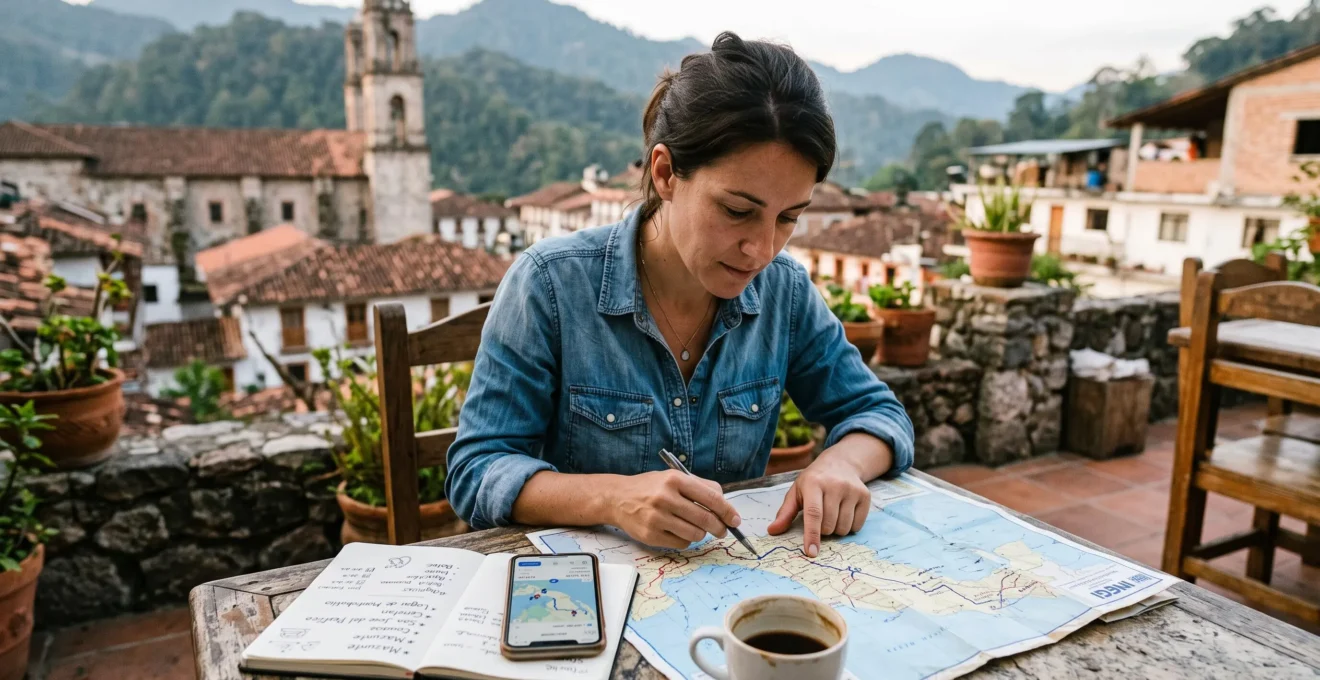
Mexico can feel surprisingly difficult to choose. Cancún promises turquoise water, Oaxaca offers food and cultural depth, Mexico City could fill an entire holiday, and the colonial highlands introduce another tempting collection of towns. With only ten days available, trying to fit everything in can turn an exciting trip into a complicated transport exercise.
The simplest solution is not to research every destination. It is to decide what kind of holiday you actually want, how often you are prepared to change accommodation, and how much of your limited time you are willing to spend travelling.
For most first-time visitors from the UK, one well-chosen region or two complementary bases offers a more manageable starting point than a cross-country itinerary. Beach lovers, culture-focused travellers and people seeking a peaceful historic property will naturally arrive at different answers.
The aim is to choose somewhere that matches your energy, interests and practical constraints, rather than somewhere that merely looks irresistible in photographs.
Mexico in 10 days: the essentials
- Choose your holiday style first: daily beach access, cultural exploration or a balanced combination should determine your initial shortlist.
- Keep the route compact: one region is usually the easiest choice; two complementary bases can work if the transfer is straightforward.
- Check flights and cancellation terms before committing: a cheap room can become expensive once transfers, local transport and inflexible bookings are included.
- Why Is Picking a Mexico Destination Harder Than Picking One in Europe for a 10-Day Trip?
- How to Narrow Mexico Down to 2 Destinations Using a 3-Question Travel-Style Filter?
- Which Works Better for You: A Colonial City Break or a Jungle-and-Beach Base in Mexico?
- The Booking Mistake That Leaves You Stuck in the Wrong Mexico Destination for 5 Nights
- In What Order Should You Choose Flights, Destinations, and Hotels for Mexico Without Overpaying?
- Which Suits You Better: A Remote Hacienda Stay or a City-Edge Colonial Estate?
- How to Pick 3 Highland Cities That Feel Different From Each Other on a 10-Day Trip?
- How to Build a Central Highlands Route in Mexico That Doesn’t Feel Like the Same City 4 Times
Why Is Picking a Mexico Destination Harder Than Picking One in Europe for a 10-Day Trip?
Choosing a Mexican destination is harder because the country’s size, regional differences and transport requirements make familiar European city-hopping assumptions unreliable. A journey that looks manageable on a map may consume most of a day. With ten days available, adding destinations often means sacrificing time you could spend enjoying them.
Travellers accustomed to moving between European capitals by rail may instinctively imagine a similar experience in Mexico. Yet a route linking Mexico City, Oaxaca and the Caribbean coast involves a very different calculation from visiting several neighbouring European cities.
For perspective, the Instituto Politécnico Nacional‘s Oaxaca transportation information places the Mexico City–Oaxaca road journey at over 480 kilometres, with an approximate bus travelling time of six to seven hours. Flying takes approximately one hour and fifteen minutes in the air, but that excludes airport journeys, check-in and other formalities.
6–7 hours
Approximate bus journey between Mexico City and Oaxaca. This is the travelling time, not a complete hotel-to-hotel estimate.
Instituto Politécnico Nacional, Oaxaca transportation guidance.
Another complication is that Mexico accommodates very different holidays. A resort stay on the Caribbean coast and a cultural journey through historic highland cities may both be wonderful, but they rely on contrasting daily rhythms.
A coastal holiday might involve swimming, beach conditions and excursions into natural landscapes. A highland city stay may revolve around neighbourhood walks, architecture, food markets, museums and evening restaurants. Trying to satisfy both styles across distant regions introduces additional planning.
Consider a hypothetical itinerary containing Mexico City, Oaxaca and Cancún. Even if flights connect the stops conveniently, every relocation introduces packing, transfers, accommodation check-ins and less freedom to change plans. The attraction of visiting three recognisable destinations can conceal how little relaxed time remains.
A useful rule for ten days is to give each destination a clear purpose. If a proposed stop offers little that your existing base cannot provide, it probably does not deserve another move.
The objective is not to experience the whole country. It is to choose one satisfying version of Mexico and leave the other possibilities for another visit.
How to Narrow Mexico Down to 2 Destinations Using a 3-Question Travel-Style Filter?
To narrow Mexico down to two destinations, answer three questions: do you need the sea every day, do you prefer one base or two contrasting stops, and how much transfer time can you tolerate? These answers eliminate unsuitable regions before photographs, hotel offers or popular itineraries complicate your decision.
The filter works because it starts with what would genuinely affect your enjoyment rather than what looks appealing in isolation.
- Is daily ocean access essential? If swimming, beaches and coastal scenery define your idea of a holiday, prioritise a coastline. If the sea is optional, consider a highland city or cultural region.
- Would you rather settle in or move once? A single base suits travellers who dislike repacking and navigating transport. Two bases suit those who enjoy contrast without needing an elaborate route.
- How much travel feels acceptable? Decide whether you can tolerate one substantial transfer, or whether even a half-day relocation would noticeably reduce your enjoyment.
The following decision grid illustrates how different answers lead to different shortlists. These are planning examples rather than fixed rules.
| Travel preference | Suggested shortlist | Why it fits |
|---|---|---|
| Ocean essential; one base; minimal transfers | Riviera Maya or Puerto Vallarta area | Concentrates accommodation and activities within a coastal region. |
| Culture first; one base; minimal transfers | Mexico City or Oaxaca | Offers substantial cultural variety without requiring a second destination. |
| Culture first; two stops; moderate transfers | Mexico City and Oaxaca | Combines a large metropolis with a smaller cultural and gastronomic centre. |
| Ocean important; two stops; moderate transfers | Two contrasting bases within one coastal region | Introduces variety without requiring a distant cross-country connection. |
Once you have a shortlist, identify the purpose of each destination. Two places should ideally complement one another rather than repeat the same experience.
For example, choosing two beach towns because both appeared in attractive travel videos may create unnecessary relocation if they offer essentially the same activities. A quieter beach base and a busier cultural centre might produce more meaningful contrast, provided the journey between them is sensible.
The two-destination ceiling is a practical guideline, not a national travel rule. A third stop can work in a compact region, but it should earn its place by adding a distinct experience without consuming disproportionate time.
Use one final test: if reaching your second destination requires an additional overnight stop purely for logistics, reconsider the pairing.
You should now have no more than two serious options, with a clear reason for visiting each. The next decision is whether those options match the way you actually spend your days.
Which Works Better for You: A Colonial City Break or a Jungle-and-Beach Base in Mexico?
A colonial city break works better if you enjoy walking, architecture, restaurants and flexible days. A jungle-and-beach base is better if swimming, warm coastal surroundings and outdoor nature experiences make a holiday feel complete. Neither is universally easier: the best option depends on your energy, weather tolerance and need for spontaneous activities.
Mexico’s highland cities and tropical coastal areas offer different everyday experiences, not simply different attractions.
In a historic city such as Oaxaca or Guanajuato, a rewarding day might involve walking through neighbourhoods, visiting a market, exploring architecture and spending an evening in a local restaurant. It is possible to build much of the holiday around one centrally located accommodation base.
On a coastal itinerary, the day might involve a beach, a cenote, a boat excursion or a nature reserve. These experiences can be satisfying but may require more attention to transport, opening arrangements and local conditions.
Climate also matters. According to INEGI‘s overview of Mexico’s climates, elevation influences temperature differences across Mexico, with lower-elevation areas generally experiencing warmer conditions. A highland itinerary may therefore require a different wardrobe from a tropical coastal holiday.
Coastal conditions introduce additional variables. In the Mexican Caribbean, sargassum can affect the beach experience. CONABIO‘s satellite sargassum monitoring and forecasts provide useful regional information, although offshore observations and probabilistic forecasts cannot guarantee conditions on an individual beach.
| Factor | Colonial city | Jungle-and-beach base |
|---|---|---|
| Daily rhythm | Neighbourhood exploration, cafés, markets and cultural visits | Swimming, outdoor excursions and nature activities |
| Transport | Potentially walkable central base, depending on location | May require taxis, arranged excursions or a vehicle |
| Rest day | Cafés, museums and shorter local walks | Beach or accommodation-based relaxation |
| Weather considerations | Elevation, cooler evenings and seasonal rain | Heat, tropical rain and potentially changing sea conditions |
| Food and evenings | Restaurants and city neighbourhoods | Depends more heavily on the particular town or property location |
The hybrid option can work if both environments are essential and flights or transfers connect them efficiently. For example, a short cultural stay followed by a longer coastal stay may create a satisfying change of pace.
However, splitting ten days equally between distant regions can feel like two compressed holidays. Count the time spent changing locations before deciding that the contrast justifies the journey.
If your ideal day involves wandering rather than arranging transport, lean towards a city. If you feel you have not been on holiday without getting into the water, give the coast priority.
The Booking Mistake That Leaves You Stuck in the Wrong Mexico Destination for 5 Nights
The expensive mistake is committing to a long, inflexible accommodation stay before checking whether the location suits your holiday style. A beautiful hotel can still be the wrong base if everything requires transport, the surroundings are noisier than expected, or the climate and daily pace do not match your expectations.
Imagine finding an attractive boutique property outside a historic town. The photographs show gardens, a swimming pool and traditional architecture. You book several nights at a seemingly good rate, then discover that reaching restaurants or attractions requires a taxi every time.
The accommodation itself may be excellent. The problem is that its location conflicts with the spontaneous, walkable holiday you wanted.
The reverse can happen with a central property. A traveller dreaming of silence and long poolside afternoons may find that staying beside a busy square is convenient but not restful.
Validate the base before making a long non-refundable commitment. Start by examining the property on a map and calculating realistic journeys to the places you expect to visit most frequently.
Read reviews for repeated practical concerns rather than relying on overall ratings. Mentions of traffic noise, difficult evening transport, uncomfortable heat, limited nearby restaurants or inconvenient distances can be more informative than enthusiastic comments about décor.
If your travel dates and accommodation availability permit, a useful approach is to reserve the first two or three nights on flexible terms. You can then decide whether to extend the stay, move within the same area or continue to a second base.
There is an important limitation: this approach does not guarantee availability for the remaining nights. During popular travel periods, an entire trip may need to be booked in advance. In that case, choosing refundable accommodation where affordable and understanding the cancellation deadline provides a more realistic compromise.
Small boutique hotels and remote properties may have restrictive conditions, but terms vary by property and booking channel. Never assume that every Mexican hotel is less flexible than an equivalent European property.
Hypothetical example: choosing between two Oaxaca stays
A couple wants to spend five nights exploring Oaxaca on foot. Property A has gardens and a lower nightly room rate but sits outside the centre. Property B costs more per night but is within comfortable reach of their planned activities.
After adding expected daily taxi journeys and considering how often they want to go out in the evening, the couple may find that Property B offers better overall value. The correct choice depends on actual transport quotations and their preferred daily routine, not the headline room price.
Getting the base right matters more than finding the most photogenic room. Once you know where you genuinely want to stay, the booking sequence becomes much easier.
In What Order Should You Choose Flights, Destinations, and Hotels for Mexico Without Overpaying?
Start by comparing international flight routes and arrival airports, then choose a realistic destination shortlist, calculate the total transport cost and finally commit to accommodation. Flights often impose the biggest geographical constraint, but the cheapest airfare is not necessarily the cheapest complete holiday. Check booking conditions before paying for either element.
For travellers departing from the UK, the arrival airport can strongly influence the route. Flying into Cancún naturally favours a Caribbean itinerary, while arriving in Mexico City opens different cultural and highland possibilities.
Before buying a ticket, compare plausible entry and departure airports. An open-jaw itinerary, arriving in one city and departing from another, may reduce backtracking, but only if the additional airfare and transfer costs make sense.
Then calculate the cost of each proposed itinerary rather than comparing airfares or hotel rates separately.
A practical total-cost calculation includes international flights, domestic connections, checked baggage, airport transfers, intercity buses, local transport and accommodation. It should also account for the time lost to travel, even though that has no fixed monetary value.
One common trap is choosing a second destination because its hotels look cheaper, then overlooking the cost of reaching it. Two domestic flights, additional baggage charges and several airport transfers can quickly undermine the apparent saving.
Flight and hotel flexibility must also be evaluated individually. Some hotels offer refundable rates, while others require non-refundable prepayment. Airfare conditions vary considerably by airline, fare type and applicable consumer rules.
For example, the U.S. Department of Transportation describes specific reservation and refund protections for eligible flights subject to its rules. Those protections do not apply universally to UK–Mexico bookings, so they should not replace checking the conditions of your actual ticket.
Nor is there a guaranteed booking window when international fares are cheapest. A more sensible process is to compare available routes over a manageable observation period, note the total price for your preferred dates and book when an acceptable option fits your budget and plans. A stable price does not guarantee it will stay stable.
Your five-step Mexico booking checklist
- Compare arrival airports: record two realistic international flight options, including their departure and arrival times.
- Choose your bases: write down one preferred region and no more than two primary accommodation locations.
- Price every transfer: create a door-to-door transport estimate covering airports, stations and hotels.
- Check cancellation conditions: record the refund deadline and penalties for each selected flight and hotel rate.
- Compare complete itineraries: produce one total-cost estimate and one travel-time estimate for each shortlisted option before booking.
Once your route and total budget make sense together, booking becomes a controlled decision rather than a chain of disconnected purchases.
Which Suits You Better: A Remote Hacienda Stay or a City-Edge Colonial Estate?
A remote hacienda suits travellers who want their accommodation to be part of the holiday, with peaceful surroundings and time spent on the property. A city-edge colonial estate suits travellers who value independence, restaurants and easier sightseeing. The important distinction is daily transport dependence, not architectural style or the appearance of the swimming pool.
Mexico’s historic-style accommodation can be appealing in both rural and urban settings. Yet two properties with similar gardens, stone courtyards and traditional furnishings may produce completely different holidays.
A remote hacienda encourages a slower routine. You might spend the morning reading in a courtyard, have lunch on-site and enjoy the grounds rather than plan another excursion.
That can be an advantage when the property provides the facilities, meals and atmosphere you want. However, remoteness may become frustrating if you expect to explore restaurants, markets and neighbourhoods independently.
A city-edge colonial estate can provide a quieter atmosphere while retaining access to town. Whether it is genuinely convenient depends on the walking route, traffic, public transport and the location of the entrance, rather than how close it appears on a map.
Before booking a remote property, investigate the cost and availability of local transport. Ask whether the accommodation arranges transfers, whether evening journeys are practical and whether meals are available on the premises.
| Decision factor | Remote hacienda | City-edge colonial estate |
|---|---|---|
| Best use of time | Relaxing on-site and enjoying the property | Combining accommodation downtime with urban activities |
| Dining | May depend on property facilities or arranged transport | Often offers more nearby possibilities, subject to location |
| Transport planning | Important for most off-site outings | Potentially simpler, but must be checked |
| Best traveller match | Rest-focused, property-led holiday | Flexible cultural exploration |
For a ten-day itinerary, a remote hacienda can work particularly well as a principal base when the stay itself is the main attraction. It can also serve as a short restorative stop within a nearby route, provided the transfer is straightforward.
What tends to create overplanning is inserting a remote stay between several unrelated destinations, especially when check-in times and privately arranged journeys dictate the schedule.
A useful question is: Would you still enjoy this property if you spent an entire day without leaving it? If the answer is yes, its remoteness could be part of the appeal. If not, look closer to the places you want to explore.
The best accommodation supports the style of holiday you have already chosen. It should not force you to redesign the trip around its location.
How to Pick 3 Highland Cities That Feel Different From Each Other on a 10-Day Trip?
To choose three contrasting Mexican highland cities, give each a distinct role: a major cultural anchor, a smaller food or craft-focused destination, and a compact historic stop. Compare their markets, architecture, cultural identity, climate and pace. Three bases only make sense if the journeys between them leave enough time to experience those differences.
Highland destinations often appear together in travel rankings because of colourful streets, historic buildings and attractive squares. But selecting three places for the same visual qualities can produce a repetitive itinerary.
Instead of asking which cities are highest-rated, ask what each would contribute that the others cannot.
Four useful comparison factors are local food identity, indigenous and regional cultural traditions, colonial and pre-Hispanic heritage, and the relationship between climate, altitude and everyday activities.
Consider a hypothetical shortlist built around Mexico City, Guanajuato and San Miguel de Allende. Their potential roles would be different:
- Mexico City: a large, energetic capital with major museums, diverse neighbourhoods and a broad cultural offering.
- Guanajuato: a smaller historic city where exploring the urban landscape and its distinctive streets can become a central activity.
- San Miguel de Allende: a compact, atmosphere-focused stop suitable for slower exploration, galleries and a more relaxed final stretch.
This combination offers differences in scale and pace, but Guanajuato and San Miguel de Allende also share aspects of their historic urban appeal. Travellers seeking stronger contrasts might prefer to replace one with a destination offering more distinct food, craft or cultural experiences, subject to realistic transport connections.
Another possible pattern is a large capital followed by a smaller food-centred city and a peaceful historic town. The actual locations should be chosen only after checking the journey times and whether the route fits your arrival and departure airports.
Three cities should differ on at least two meaningful dimensions. A different colour palette or a higher position on a travel list is not enough.
Travel time is the second test. For each connection, estimate the full hotel-to-hotel duration, including reaching the terminal, waiting, the actual journey and onward transport. Then consider whether the remaining days justify moving again.
A three-city route is a more demanding alternative to the recommended one- or two-base approach. It suits travellers who genuinely enjoy moving between cities, not those who simply fear missing somewhere famous.
If the three locations cannot be given clearly different purposes, two well-chosen cities will probably offer a more coherent and relaxed experience.
Key takeaways before building your route
- Give each destination a distinct function in the trip: cultural immersion, local craft and food, or a quieter final stay.
- Sequence destinations according to travel effort and departure logistics, rather than simply following a list of famous towns.
- Check elevation, seasonal conditions and complete transfer times before finalising the order.
How to Build a Central Highlands Route in Mexico That Doesn’t Feel Like the Same City 4 Times
Build a central highlands itinerary around contrasting experiences rather than collecting similar historic cities. Start with the most demanding cultural destination, introduce a smaller place with a different focus, and finish somewhere easier to navigate before departure. Vary activities as well as locations, and remove any stop that adds transport without changing the character of the trip.
A successful route has a rhythm. It should not feel like arriving somewhere new simply to repeat the previous day’s cathedral, central square and souvenir shopping.
For example, an itinerary could begin with several days devoted to museums, neighbourhoods and food in Mexico City. A subsequent destination might emphasise regional craftsmanship or smaller-scale historic surroundings. The final stage could be quieter, allowing time for unstructured walks and a straightforward return journey.
This is a route-design method, not a recommendation to connect particular cities without checking transport availability.
One approach is to assign each travel day a broad identity. A food-focused day could involve markets and regional cooking. Another might centre on craft workshops, architecture or archaeological heritage. A final day could prioritise a garden, scenic walk or leisurely meal.
Alternating activities helps prevent destination fatigue even when the architecture of neighbouring towns shares similarities.
The order matters too. Begin with the destination that requires the most attention while you have energy and enthusiasm. Avoid leaving a particularly complex transfer for the final stage of the trip, when a delayed journey could interfere with your international departure.
For a practical ten-day framework, imagine the following allocation:
| Days | Trip role | Suggested focus |
|---|---|---|
| 1–4 | Main cultural city | Arrival, major cultural visits, neighbourhoods and food |
| 5–7 | Contrasting second base | Transfer, local traditions, crafts or regional experiences |
| 8–9 | Optional compact third stop | Slower exploration and a different atmosphere |
| 10 | Departure | Pre-arranged transfer and international travel |
This example assumes a route with workable connections. If the transfers are lengthy or flights are awkwardly timed, eliminate the third stop and redistribute those days to the first two bases. If an early departure makes the last location inconvenient, return to the departure city the previous day or choose a different route.
Seasonality also changes the experience. Highland areas do not necessarily share the warm evenings associated with Mexico’s coastal destinations. Temperature, rainfall and comfort can vary with elevation and travel dates, so check conditions for each actual stop rather than packing for a generic Mexican climate.
Finally, try the redundancy test. If you can exchange two consecutive destinations without affecting the purpose or rhythm of the journey, they may be serving the same role. Remove one, replace it with a genuinely different experience or simply create more time to enjoy your existing base.
Choose your preferred holiday style, identify one or two places that deliver it, and check the complete journey before making bookings. A ten-day Mexico holiday does not need to cover everything to feel rewarding; it needs enough time in the right places.
Is ten days enough for a first trip to Mexico?
Yes, ten days can provide a satisfying introduction to Mexico if you concentrate on one region or combine two accessible destinations. It is less suitable for a comprehensive tour of distant regions. Check whether your ten days include international flight days, since overnight journeys and arrival times can reduce the time available on the ground.
Should I visit Mexico City or Cancún on my first visit?
Choose Mexico City if museums, restaurants, neighbourhood exploration and urban culture are your priorities. Choose Cancún or a suitable nearby Caribbean base if beach access and warm coastal surroundings are essential. Compare the precise accommodation location, seasonal conditions and onward transport before committing.
Can I travel around Mexico for ten days without hiring a car?
Yes, many itineraries can be organised using domestic flights, intercity buses, taxis and arranged transfers. The practicality depends on the chosen region and accommodation. A centrally located city hotel may reduce daily transport needs, while a remote hacienda or nature-focused coastal stay can require advance arrangements.
What should I check before choosing a beach destination in Mexico?
Check the season, expected heat and rainfall, the location of your beach, airport access and local transport. On the Caribbean coast, monitor recent sargassum information while recognising that forecasts cannot guarantee individual beach conditions. Also establish whether the accommodation provides convenient access to restaurants and the excursions you want.
Is it better to book every hotel before leaving the UK?
It depends on availability, the season and your tolerance for uncertainty. Booking ahead can provide more certainty and secure desirable properties, especially during busy periods. Flexible rates can preserve the option to change plans, while reserving only an initial stay may suit quieter travel periods. Always compare cancellation terms and the risk of limited last-minute availability.