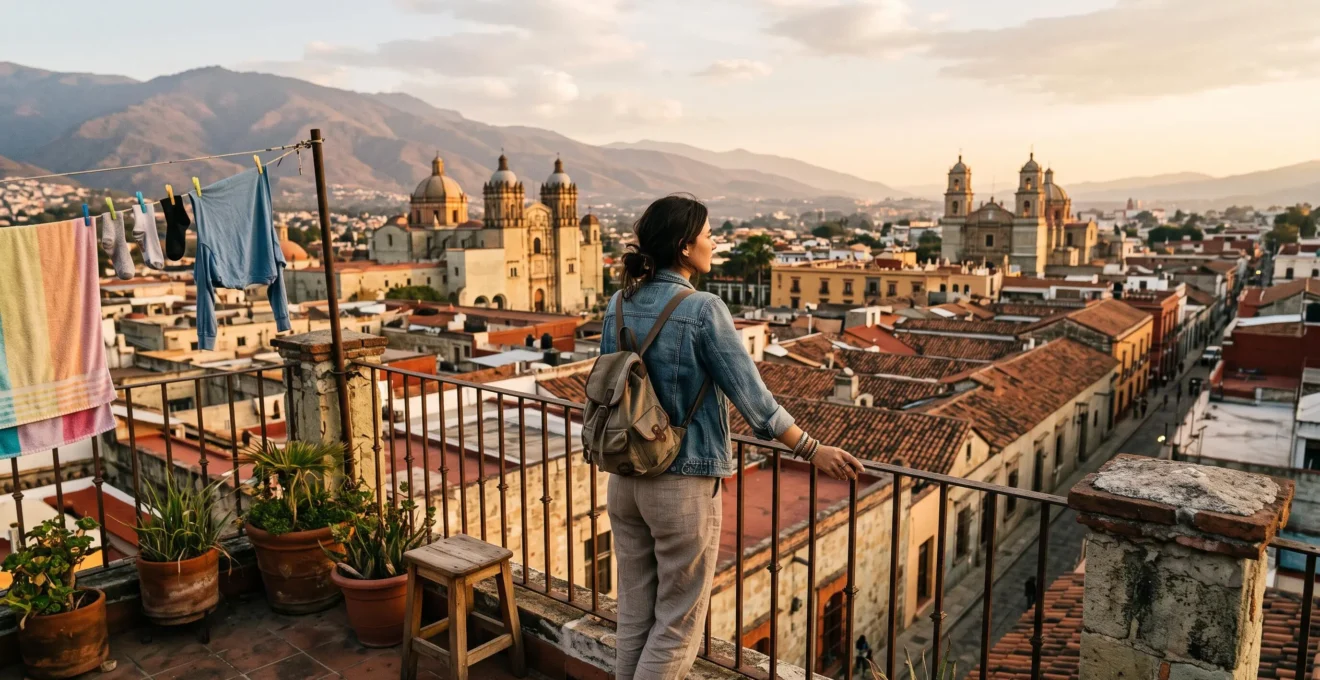
Mexico can feel like several countries within one set of borders. Spend a week around Cancún, then travel to Oaxaca, Mexico City or the northern desert, and almost everything changes: the climate, landscapes, food, architecture, transport and pace of everyday life.
For UK travellers planning a 10–21 day holiday, these differences are more than cultural curiosities. They determine whether a trip feels comfortably adventurous or unnecessarily demanding. A beach-focused traveller may love the Yucatán Peninsula but struggle with the altitude and intensity of Mexico City. Someone drawn to markets, museums and regional cooking may find a resort-centred itinerary surprisingly limiting.
The six-region perspective is a practical travel-planning framework, not an official geographical classification. It helps distinguish the Maya southeast, central highlands, Oaxaca’s cultural heartland, the Gulf, Pacific-facing destinations and the northern regions. The boundaries overlap, but the differences matter when choosing where to spend limited holiday time.
The most satisfying Mexico itinerary is rarely the one that includes the most famous places. It is the one whose regions match the traveller’s interests, preferred pace and tolerance for logistical uncertainty.
Mexico beyond the resorts: the essentials
- Choose regions by climate, cultural interests, comfort and current local security advice, rather than treating Mexico as one uniform destination.
- For a 14-day trip, two complementary regions and a limited number of accommodation bases usually offer a better balance than ambitious cross-country travel.
- Compare complete door-to-door transfers, seasonal weather and regional travel conditions before committing to an itinerary.
- Why Does Mexico Feel So Regionally Different Once You Leave Cancún?
- How to Pick 2 Mexican Regions for a 14-Day Trip Without Losing 3 Days to Travel?
- Which Mexico Fits You Best: Yucatán, Central Highlands, or the Pacific Coast for a First Trip?
- The Itinerary Mistake That Turns a Dream Mexico Trip Into 5 Exhausting Transit Days
- When Should You Combine Yucatán and the Central Highlands Without Getting Caught by Heat or Rain?
- How to Decide Between Train, Bus, and Flight in Mexico When Comfort Matters Most?
- Why Is Beef Culture So Strong in Northern Mexico Compared to the South?
- How to Build a Central Highlands Route in Mexico That Doesn’t Feel Like the Same City 4 Times
Why Does Mexico Feel So Regionally Different Once You Leave Cancún?
Mexico feels regionally different because its landscapes, historical civilisations, settlement patterns and climates developed under very different conditions. The Caribbean resort corridor represents only one part of the country. Beyond it, Maya communities, highland cities, Pacific settlements and northern ranching regions offer contrasting ways of experiencing Mexican culture, rather than variations on a single national holiday.
Mexico’s geographical diversity has deep historical roots. The INAH‘s reference to Mexico’s historical cultural regions distinguishes Aridoamerica, Oasisamerica and Mesoamerica. Within Mesoamerica, it identifies several historical regions, including the Central Highlands, Oaxaca and the Southeast.
These are historical cultural areas rather than six modern tourism zones. Nevertheless, they explain why pre-Hispanic traditions cannot be reduced to one civilisation or one architectural style. The Maya heritage of the southeast, Zapotec and Mixtec traditions associated with Oaxaca, and other regional histories remain important to understanding what visitors encounter today.
Altitude is another major dividing line. Coastal destinations around Cancún and much of the Yucatán Peninsula experience tropical conditions. Inland cities such as Mexico City and Oaxaca sit at considerably higher elevations, where temperatures and evening conditions can feel very different.
The practical consequences are immediate. A traveller packing only lightweight beach clothes may find highland evenings uncomfortable, while someone who prefers cooler walking weather may underestimate the humidity of the Caribbean coast.
Food offers another regional map. Northern destinations are strongly associated with cattle ranching, grilled beef and flour tortillas. Oaxaca offers distinctive maize-based traditions and moles, while Yucatán cooking features preparations such as cochinita pibil and regional seasoning pastes.
Daily routines also vary by city, season and neighbourhood. Markets, independent shops and smaller towns may operate differently from major tourist corridors. It is better to check local opening hours than assume a universal Mexican afternoon closing period.
Security requires equally careful distinctions. The FCDO‘s Mexico travel advice and regional security warnings identify particular states, areas and routes rather than treating every Mexican destination identically. Some warnings have specific city or transport-route exceptions. Travelling against FCDO advice can also affect insurance validity.
Regional pride and identity are significant, but neither local reassurance nor an alarming national headline should replace destination-specific research.
The important question is not which region offers the most authentic Mexico. It is which combination of experiences makes sense for the time, weather and level of independence a traveller wants.
How to Pick 2 Mexican Regions for a 14-Day Trip Without Losing 3 Days to Travel?
Choose two Mexican regions that connect through a manageable road journey or a practical domestic flight, then allow enough time to experience each. For a 14-day holiday, the safest planning approach is to minimise changes of accommodation, calculate transfers from hotel door to hotel door, and avoid regional combinations that depend on repeated connections.
A useful starting point is a half-day transfer budget: aim for approximately 4 hours door to door when changing regions. This is a planning target, not a reliable promise for every route. Some worthwhile pairings exceed it, in which case the journey should be treated as a substantial part of the holiday.
Consider three possible combinations:
- Mexico City and the central highlands: a relatively coherent cultural itinerary with museums, food, historical cities and regional day trips. Road transfers can be practical, depending on the cities selected.
- Oaxaca and the Pacific coast: a combination of inland culture and coastal relaxation. Journey times depend heavily on the particular coastal destination and chosen transport.
- Yucatán and Oaxaca: attractive for contrasting Maya heritage with Oaxacan cultural traditions, but often more demanding because convenient flights may require a connection through Mexico City.
The last option demonstrates Mexico’s indirect-routing problem. Two appealing places can look reasonably close on a national map while their actual air connections involve a major hub, airport waiting time and additional ground transport.
Before booking, calculate the complete transfer:
- Travel from accommodation to the departure terminal or airport.
- Allow for check-in, security or bus boarding.
- Add the scheduled journey and any connection time.
- Allow for arrival formalities, baggage and onward transport.
- Consider when accommodation becomes available and how much usable daylight remains.
Check actual dates against published bus schedules and operating flight options. Do not use flight duration alone as the transfer estimate.
Hypothetical 14-day itinerary: highlands followed by the coast
A traveller allocates six nights to Mexico City and nearby cultural experiences, three nights to Oaxaca and four nights to a coastal destination, with one night reserved for international arrival or departure logistics. This is an illustrative allocation, not a verified transport itinerary.
The advantage is its deliberate rhythm: urban exploration first, regional cuisine and heritage next, and a slower coastal finish. The final feasibility depends on actual flight availability, road connections and the UK return itinerary.
Starting with the more demanding cultural region may suit travellers who prefer to explore while their energy is highest. Finishing by the sea provides a natural recovery period, although there is no need to force that sequence if flights or weather favour the reverse.
A well-connected itinerary can make two very different regions feel surprisingly accessible. The next decision is which pair best matches the traveller’s priorities.
Which Mexico Fits You Best: Yucatán, Central Highlands, or the Pacific Coast for a First Trip?
The Yucatán Peninsula generally suits first-time visitors who want established tourism services, Caribbean beaches and archaeological day trips. The central highlands appeal to travellers prioritising food, museums, architecture and walking-based exploration. Selected Pacific coast destinations suit those seeking surf, coastal communities and a less structured holiday, provided they are comfortable checking local transport and swimming conditions.
Choosing between them is easier when the decision begins with daily preferences rather than famous landmarks.
| Decision factor | Yucatán and Caribbean | Central highlands | Pacific coast |
|---|---|---|---|
| Typical appeal | Maya heritage, beaches, cenotes, day trips | Markets, museums, architecture, restaurants | Surf, coastal scenery, smaller communities |
| Climate consideration | Heat and humidity, particularly in warmer months | Altitude, cooler evenings, seasonal rain | Coastal heat and locally variable rainfall |
| Transport style | Tourist transfers, buses and selected rail services | Intercity buses, walking and city transport | Flights, buses and locally arranged transfers |
| Language comfort | English widely available in major visitor areas | Spanish increasingly useful outside tourist services | Spanish especially helpful in smaller settlements |
| Main physical consideration | Humidity and outdoor heat exposure | Altitude, stairs and hillside walking | Surf conditions, currents and coastal access |
Safety must be assessed by destination, not coastline. A popular Caribbean swimming beach is not interchangeable with an exposed Pacific surf beach. Conditions also vary within the same region, and calm-looking water is not proof that swimming is safe.
Likewise, the Pacific coast is not one consistent security or infrastructure category. The FCDO identifies restrictions affecting parts of several Pacific-facing states, with specified exceptions. An otherwise attractive beach town should not be recommended without checking the current advice and the route used to reach it.
Healthcare access also differs between larger tourism centres, major cities and remote communities. Travellers with medical requirements should assess proximity to suitable facilities and the transport involved, rather than relying on a region’s general reputation.
For solo travellers, the value of a well-connected base, reliable arrival transport and accommodation with clear check-in arrangements may outweigh the appeal of a secluded location. Older travellers or those with reduced mobility should pay particular attention to steep streets, uneven pavements and the physical demands of excursions.
A quick compatibility test can narrow the choice:
- If hot, humid weather reduces your enjoyment of sightseeing, give highland destinations greater consideration.
- If you prefer a stable base with several organised day trips, consider established Yucatán destinations.
- If you like independent coastal travel and are willing to adapt plans to local conditions, investigate individual Pacific destinations.
- If your favourite holiday activities are museums, restaurants and neighbourhood walks, favour the cultural cities.
Chichén Itzá, Frida Kahlo’s Mexico City and Puerto Escondido may inspire a journey, but a single attraction should not determine the entire holiday.
Once a region matches your preferences, the main threat to enjoying it is often an itinerary that moves too quickly.
The Itinerary Mistake That Turns a Dream Mexico Trip Into 5 Exhausting Transit Days
The mistake is adding destinations individually without calculating the cumulative cost of moving between them. Each transfer may appear reasonable, but repacking, checking out, travelling to terminals, waiting for departures and reaching new accommodation can consume large portions of a holiday. Five hotel changes can create five disrupted mornings, even when individual journeys look relatively short.
Mexico’s scale amplifies this problem. A traveller may reasonably want to see Mexico City, Puebla, Oaxaca, Mérida, Cancún and a Pacific beach within the same fortnight. Yet combining attractive stops does not make the connecting journeys efficient.
Instead of counting only kilometres or scheduled bus hours, count mornings lost to logistics. A two-hour journey that requires early checkout, terminal travel and afternoon accommodation access may take away much more usable sightseeing time than expected.
For illustration, suppose an itinerary involves five relocations, each consuming four hours door to door. That represents 20 hours of movement and related logistics before accounting for disrupted mornings or unexpected delays. It is a hypothetical planning calculation, not a claim about any particular Mexican route.
A useful correction is the two-night minimum filter. If a stop does not justify at least two nights, consider turning it into a day trip or removing it altogether.
Oaxaca can serve as a base for exploring the city’s markets, food and selected surrounding communities. Mérida offers access to different Yucatán experiences without requiring a new hotel every night. Guadalajara can support a combination of urban exploration and regional excursions, subject to current route and safety checks.
The goal is not to avoid all one-night stops. An overnight stay near an international departure airport or an unavoidable connection may be sensible. The rule is intended to challenge unnecessary accommodation changes.
Five actions to audit a Mexico itinerary before booking
- List every overnight location in chronological order and produce a complete accommodation timeline.
- Write the door-to-door transfer estimate beside each relocation, including terminal access and waiting time; produce a transfer-time column.
- Mark every stay shorter than two nights and produce a shortlist of stops to remove, extend or convert into day trips.
- Check each region, city and connecting route against current FCDO advice and insurance conditions; produce a dated safety-check record.
- Rebuild the itinerary with fewer transfers and at least one low-effort day after demanding travel; produce a final day-by-day plan.
Overnight buses can sometimes preserve a daylight sightseeing window, but they introduce a different cost: sleep quality. Some travellers wake refreshed; others lose the following day to fatigue. This trade-off becomes particularly relevant before strenuous highland exploration.
Once the route is simplified, travel dates become the next major variable, especially when combining tropical lowlands with high-altitude cities.
When Should You Combine Yucatán and the Central Highlands Without Getting Caught by Heat or Rain?
November to February is a useful starting window for combining the Yucatán Peninsula and Mexico’s central highlands, especially for travellers who prefer less tropical heat and comfortable daytime sightseeing. However, there is no universally dry or perfectly comfortable month across both regions. Highland evenings can be cool, while the Yucatán remains comparatively warm, and rainfall patterns vary by destination.
The underlying issue is that these regions belong to different climatic environments. The Yucatán’s low elevation contributes to its tropical conditions, while much of the central highlands experiences cooler temperatures associated with altitude.
The INEGI‘s geographical overview of Mexico’s climate diversity distinguishes several climatic types and identifies elevation as an important factor influencing temperature.
This difference matters more than a single nationwide weather forecast. A packing list suitable for the Caribbean coast may be inadequate for evenings in Mexico City or other elevated destinations.
The Atlantic hurricane season officially runs from June to November, although actual storm conditions and exposure vary. Much of the Yucatán Peninsula also experiences a wetter warm season. Inland highland destinations have their own seasonal rainfall patterns, often making flexible outdoor scheduling valuable.
Summer travellers should not automatically exclude Mexico. They should instead decide which forms of discomfort are acceptable: coastal humidity, occasional rain interruptions, cooler highland evenings or increased weather-related uncertainty.
| Travel period | Yucatán considerations | Central highlands considerations |
|---|---|---|
| December–February | Generally attractive for travellers seeking less intense heat; popular visitor period | Often comfortable for daytime exploration, with cooler nights |
| March–May | Increasing heat can affect outdoor excursions | Spring conditions vary by city and elevation |
| June–October | Warmer, wetter conditions and tropical weather risks | Rainy-season planning and flexible sightseeing useful |
| November | Transition towards more favourable conditions, with some remaining storm-season exposure | Potentially appealing for walking, with cooler evenings |
Rain does not necessarily mean continuous downpours. Showers may be concentrated into parts of the day, allowing sightseeing to be rearranged. However, tropical storms and exceptional weather can cause much more serious disruption, so ordinary rainy-season patterns should not be used to dismiss warnings.
Travel cost is another consideration. Popular winter dates can increase demand for coastal accommodation, while major festivals and holiday periods influence availability in individual highland cities. Check the local event calendar before treating a season as uniformly quiet or affordable.
The best travel month is ultimately the one that makes both regions comfortable enough for your planned activities, not the month advertised as ideal for Mexico as a whole.
How to Decide Between Train, Bus, and Flight in Mexico When Comfort Matters Most?
Choose transport by comparing total journey time, seating comfort, sleep requirements, baggage rules and the exact route. Intercity buses are often convenient for manageable regional distances, while domestic flights can make long journeys substantially easier. Passenger rail is available on selected Mexican corridors, but it is not yet a universal alternative for connecting the country’s main destinations.
Mexico’s passenger railway options are more varied than the assumption that trains do not exist. Official tourism information identifies the Maya Train in the southeast, Chepe Express through the Copper Canyon, the Interoceanic Train and selected urban and regional services.
However, the existence of a railway does not establish that it provides the best connection between two particular destinations. Operating schedules, station locations and current service status must be checked.
For many familiar tourist routes, the practical choice remains bus versus flight.
Premium long-distance buses can offer comfortable reclining seats, air conditioning, toilets and varying levels of onboard amenities. Some overnight services provide an alternative to paying for accommodation while travelling, although seat configuration and service standards vary.
A domestic flight may be preferable where road travel is lengthy or uncomfortable. Yet an apparently short flight involves airport access, check-in, security, boarding and onward transport. Low-cost fares may also become less attractive when checked baggage and other charges are added.
A useful decision method is to start with a rough four-hour road-time threshold. For shorter journeys, compare bus simplicity against the complete flight process. Beyond that point, investigate flights more seriously rather than automatically assuming they will save time.
This is an itinerary heuristic, not a measured rule about Mexico’s transport network.
For routes served by ADO, compare actual departure times and service classes rather than assuming every coach offers identical comfort. A long-distance bus may be convenient, but a late-night arrival or early-morning departure can undermine that advantage.
Motion sickness is another factor on mountainous roads. Travellers sensitive to winding journeys may reasonably prefer air travel even when it costs more or involves a longer transfer to the airport.
Overnight road transport also needs a safety assessment. A timetable showing a convenient departure does not establish that the road or journey is advisable under current UK travel guidance.
Transport is part of the regional experience, but choosing it carefully protects the time and energy needed to appreciate the differences between destinations.
Why Is Beef Culture So Strong in Northern Mexico Compared to the South?
Beef plays a prominent role in many northern Mexican culinary traditions because ranching developed alongside the region’s geography, colonial history and connections across what is now the US–Mexico border. Southern cooking traditions developed in different agricultural and cultural settings, with maize, beans, local produce and distinctive Indigenous foodways playing major roles. These are broad regional patterns, not exclusive diets.
Cattle were introduced during the colonial period and became important within ranching economies across parts of northern Mexico. Large areas of comparatively dry terrain influenced land use and livestock production, while commercial and cultural connections with neighbouring Texas reinforced regional meat traditions.
For travellers, these histories appear directly on the menu. Sonora is especially associated with grilled beef and flour tortillas. Other northern states, including Coahuila and Nuevo León, have their own versions of carne asada and meat-centred cooking.
Flour tortillas are an important part of this northern food landscape, although their presence does not mean maize disappears from local diets.
Further south, the culinary picture changes. Oaxaca is renowned for diverse maize-based preparations, moles and regional ingredients. The Yucatán Peninsula has distinctive cooking methods and seasonings associated with Maya and subsequent culinary traditions, including cochinita pibil and recados.
Chiapas has additional regional food traditions that should not simply be grouped together with either Oaxaca or Yucatán.
This food geography can help shape an itinerary. A traveller fascinated by northern grilling traditions might be disappointed by a trip that never leaves the southeast. Someone more interested in moles, markets and Indigenous culinary heritage may find Oaxaca a stronger fit than a destination selected mainly for its national reputation.
Neither region offers a single, unchanging menu. Contemporary Mexican cooking crosses regional boundaries, and restaurants serving dishes associated with other states are widespread.
The environmental context is also worth considering. Cattle production and agriculture in arid areas can place pressure on land and water resources, but the scale and impact depend on specific production practices and local conditions. It would be misleading to assign a single sustainability verdict to all northern beef.
For a food-focused traveller, regional specialities are a better guide than generic expectations of Mexican cuisine. Learning how a local dish is produced and why it matters often adds more to the experience than simply searching for a supposedly authentic restaurant.
Food differences also offer a useful principle for cultural sightseeing: choose places with distinct identities rather than collecting destinations that provide nearly identical experiences.
Key takeaways before planning the highlands
- Choose highland cities for their individual cultural identities, not simply because they appear on a standard colonial-city itinerary.
- Build in contrasting activities, such as food markets, archaeological visits and craft traditions, between architecture-focused days.
- Account for elevation, hilly streets, transfers and current route-specific travel advice before finalising the sequence.
How to Build a Central Highlands Route in Mexico That Doesn’t Feel Like the Same City 4 Times
Build a varied central highlands route by selecting two or three cities with clearly different identities and alternating urban sightseeing with food, archaeology, crafts or nature. Rather than visiting every famous colonial destination, choose places that introduce genuinely new experiences. This reduces repetitive city walks, limits transfers and leaves more energy for exploring each location properly.
Guanajuato, San Miguel de Allende, Querétaro and Puebla can all offer historic architecture, plazas and cultural institutions. But their similarities become more noticeable when travellers spend successive days following the same pattern of churches, cafés, galleries and central squares.
Contrast is the solution. Each destination should contribute something that the previous stop did not.
Guanajuato has a dramatic hillside setting, distinctive underground road tunnels and a strong university-city character. San Miguel de Allende is known for its artistic scene, galleries and significant international resident community. Querétaro offers an important historic centre and a different urban setting.
Puebla provides a particularly interesting combination of architectural heritage, Talavera ceramics and regional gastronomy. Oaxaca, although often treated as a separate cultural destination rather than part of a narrowly defined central highlands route, can add a markedly different food, craft and Indigenous heritage dimension.
The purpose is not to rank these places by beauty. It is to identify which experiences would remain memorable after several days of travelling.
| Destination | Distinctive experience | Best reason to include it |
|---|---|---|
| Guanajuato | Hillside streets, tunnels and university atmosphere | Unusual urban geography and energetic cultural surroundings |
| San Miguel de Allende | Art galleries and an internationally oriented cultural scene | Creative interests and a slower cultural stay |
| Querétaro | Historic architecture within a substantial modern city | Urban heritage and a practical regional base |
| Puebla | Talavera, regional food traditions and architectural heritage | Combining crafts, food and historical sightseeing |
| Oaxaca | Indigenous heritage, markets, crafts and distinctive cuisine | Adding a different cultural and culinary perspective |
An illustrative route could begin in Mexico City, continue to Puebla and then Oaxaca, provided the actual dates, connections and safety advice support the journey. This arrangement creates a progression from a major metropolis through a distinctive historical city to a region with its own culinary and craft traditions.
An alternative focused on Bajío cities could combine Querétaro with one carefully chosen nearby destination rather than attempting every celebrated colonial centre. Any proposed Guanajuato-state excursions should be checked against the FCDO’s area-specific warnings and permitted routes.
Variety does not always require another hotel. From a suitable base, travellers can explore local museums, archaeological sites, markets or craft communities through carefully planned excursions. Accessibility, travel time and road conditions should determine which outings are practical.
Physical effort deserves attention too. Hill walking, cobbled streets, stairs and altitude can make some highland days demanding, especially for people unaccustomed to sustained walking at elevation. A quieter day between major sightseeing sessions may be more beneficial than adding another stop.
For a 10–21 day holiday, this approach provides flexibility. A shorter trip can focus on Mexico City and one contrasting region; a longer journey can expand the route without sacrificing the time needed to understand each destination.
Before booking, write down the main experience you want from each destination, confirm the connections and safety conditions, and remove any stop that duplicates another without offering a compelling reason to stay. A rewarding Mexico trip is built around meaningful contrasts, not the number of places visited.
Is 14 days enough to experience more than one side of Mexico?
Yes. Two weeks can accommodate two contrasting regions when transfers are practical and accommodation changes are limited. Prioritise usable days over the number of destinations, and calculate the complete journey between bases before booking.
Can UK visitors travel around Mexico without speaking Spanish?
Many established tourist destinations provide English-language services, but availability becomes less predictable in smaller towns, local transport settings and independent businesses. Basic Spanish for directions, transport, accommodation and emergencies can make travel more comfortable and independent.
Should UK travellers avoid entire Mexican states because of security headlines?
Travellers should follow the current FCDO guidance for the precise state, city, area and route concerned. Some warnings cover whole states, while others specify particular areas or exceptions. A destination outside a restricted area is not automatically risk-free, and insurance conditions must also be checked.
Is hiring a car necessary for a multi-region Mexico itinerary?
No. Domestic flights, intercity buses and selected train services can support many itineraries without a hire car. Driving may be useful in particular areas, but road safety, permitted routes, parking, insurance and local conditions should be reviewed before deciding.
How far ahead should a Mexico itinerary be finalised?
Establish the regions and international arrival and departure points before committing to non-refundable accommodation. Confirm domestic connections, significant local events and likely seasonal conditions early enough to preserve useful alternatives. Recheck transport operations, weather alerts and FCDO advice close to departure because circumstances can change.