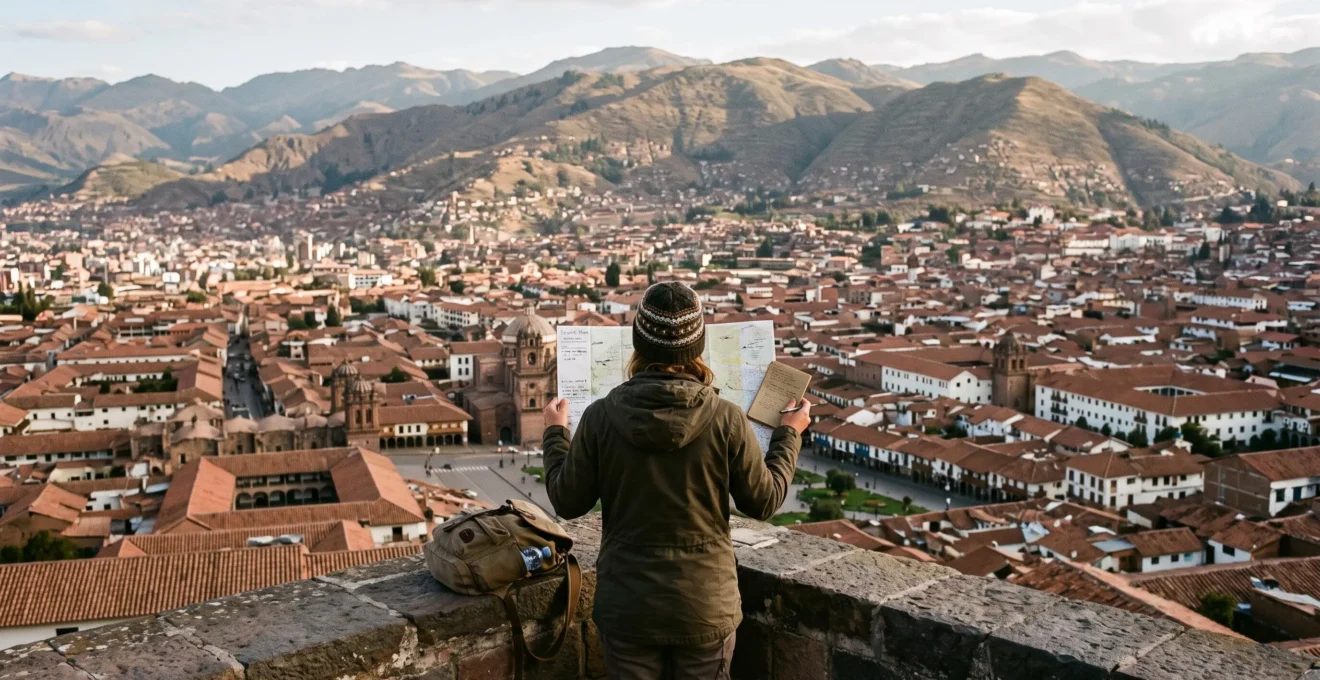
Mexico’s Central Highlands can produce an extraordinary itinerary or a surprisingly repetitive one. The difference rarely comes down to how many beautiful colonial cities fit into your schedule. It comes down to what each destination contributes, how efficiently you connect them and whether your first days account for the elevation.
For UK travellers arriving after a long-haul flight, combining Mexico City, San Miguel de Allende, Guanajuato and several smaller historic towns can look logical on a map. Yet the experience may become a succession of churches, plazas, craft shops and hotel check-ins. Meanwhile, the altitude and intercity journeys quietly reduce the time available to enjoy each place.
A better Central Highlands route assigns each stop a different purpose. One city might deliver museums and metropolitan neighbourhoods, another mining heritage and unusual terrain, and a third a contrasting cultural landscape. The strongest itinerary is not the one with the most stops. It is the one in which every transfer earns its place.
Central Highlands route planning: the essentials
- Choose cities by their activities, terrain and pace, rather than their colonial appearance alone.
- Allow a gentle first 48 hours at altitude, particularly after travelling directly from the UK.
- For seven days, favour one or two bases; for ten to fourteen days, add contrasting destinations only when the transfers make sense.
- Why Are So Many of Mexico’s Must-Visit Cities Clustered in the Central Highlands?
- How to Pick 3 Highland Cities That Feel Different From Each Other on a 10-Day Trip
- Which Is Better for the Central Highlands: One Base With Day Trips or 3 Cities in 7 Days?
- The Altitude Mistake That Flattens UK Travellers on Their First Highland Day in Mexico
- When Should You Start a Highland Itinerary: Mexico City First or a Lower-Altitude Town?
- How to Pick 2 Mexican Regions for a 14-Day Trip Without Losing 3 Days to Travel
- Which Suits You Better: A Remote Hacienda Stay or a City-Edge Colonial Estate?
- How to Tell if a Restored Colonial Estate in Mexico Is Worth the Price or Just Instagram Bait
Why Are So Many of Mexico’s Must-Visit Cities Clustered in the Central Highlands?
Many of Mexico’s celebrated historic cities are concentrated in the Central Highlands because colonial-era mining, commerce and transport networks helped establish prosperous settlements across the elevated interior. Silver wealth was especially influential in places such as Guanajuato and Zacatecas. But their shared historical background does not mean they offer identical experiences. Repetition usually results from selecting destinations by architecture rather than character.
Guanajuato demonstrates the historical mechanism particularly clearly. Silver deposits discovered in the surrounding hills helped transform the settlement into a major mining centre. According to UNESCO‘s description of Guanajuato and its historic mines, the city became the world’s largest silver-extraction centre during the eighteenth century. Its prosperity financed significant Baroque and Neoclassical architecture.
That prosperity also shaped trade, settlement and cultural exchange across central Mexico. Yet it would be misleading to explain every highland destination through silver mining alone. Different cities developed through different combinations of administration, agriculture, education, trade and regional geography.
The landscape is the first way to distinguish them. Guanajuato occupies narrow, winding valleys, with tunnels, steep streets and buildings climbing the hillsides. Its documented heritage landscape lies at approximately 2,084 metres above sea level.
Mexico City, at roughly 2,240 metres, delivers a completely different scale: large urban districts, museums and metropolitan life. San Miguel de Allende offers a smaller, more contained historic-town experience. Guadalajara contributes the rhythms of a major regional city, while lake country, mountain landscapes and rural estates provide alternatives to continuous urban sightseeing.
Altitude nevertheless connects many of these destinations. Several prominent stops sit around 1,500–2,240 metres or higher, so a route that looks like an easy sequence of city breaks can involve repeated exertion at elevations unfamiliar to visitors arriving from near sea level.
Think of the region as a collection of different landscapes and urban functions, not a chain of interchangeable colonial centres. A mining town, a large cultural city and a rural retreat can justify three stops. Three towns selected solely for picturesque squares may not.
Once that distinction is clear, choosing cities becomes an exercise in contrast rather than accumulating famous names.
How to Pick 3 Highland Cities That Feel Different From Each Other on a 10-Day Trip
Choose three destinations that differ in their main purpose, physical setting and daily rhythm. A strong ten-day combination might pair Mexico City for museums and neighbourhoods, Guanajuato for mining heritage and dramatic terrain, and Guadalajara for contemporary regional city life. Oaxaca is another compelling contrast, although it works better as an extension into a neighbouring region than as part of a compact Central Highlands loop.
Use three criteria before committing to any shortlist. The objective is not to find three attractive places, but to discover whether each one will change what you actually do from morning to evening.
| Criterion | Question to ask | What creates variety |
|---|---|---|
| Dominant function | What is the main reason to visit? | Metropolitan museums, mining heritage, regional food culture or nature |
| Terrain | What landscape shapes the experience? | Mountain valley, broad urban basin, lake or rural countryside |
| Daily pace | How does a typical day unfold? | Neighbourhood exploration, compact walking, outdoor excursions or restorative downtime |
A hypothetical ten-day route could allocate four nights to Mexico City, three to Guanajuato and two to Guadalajara, with departure on the final day. This produces three different experiences without demanding a new hotel every other night. The geographical progression is also more coherent than repeatedly returning to Mexico City between stops.
For a heritage-focused alternative, San Miguel de Allende can replace Guanajuato. But that substitution changes the character of the trip: San Miguel prioritises a compact historic-town atmosphere, whereas Guanajuato places mining infrastructure and steep urban terrain at the centre of the experience.
Oaxaca offers another form of contrast. Its historic centre follows a colonial grid, while Monte Albán introduces a much older archaeological landscape associated with pre-Columbian civilizations. The combination is documented in UNESCO’s heritage description of Oaxaca and Monte Albán.
However, cultural contrast does not automatically produce an efficient itinerary. Adding Oaxaca to Guanajuato and Guadalajara may introduce an awkward transfer or a connection through Mexico City. That can consume the time the third destination was supposed to enrich.
Before booking, verify the actual service on each leg. Mexico City–Oaxaca has direct bus services; other combinations require separate timetable checks. A route should be judged door to door, including taxis, station waiting, luggage handling and hotel access, rather than by the duration of the bus or flight alone.
Five checks before booking your three-city route
- Write one distinct reason to visit each city. Deliverable: three purposes without overlapping descriptions.
- Assign each stop a terrain and pace category. Deliverable: a three-row comparison showing meaningful differences.
- Draft a typical day in every destination. Deliverable: three daily outlines that do not all begin with a plaza, church and souvenir market.
- Check the actual connections for your intended dates. Deliverable: a door-to-door transfer estimate for both journeys.
- Replace one repetitive sightseeing activity with a different experience, such as a cooking workshop, craft-village visit or suitable outdoor excursion. Deliverable: one distinctive activity confirmed for each stop.
The warning signs are straightforward: identical daytime routines, repeated souvenir-shopping districts and evenings spent seeking the same type of restaurant in differently coloured streets.
A well-chosen ten-day itinerary should feel varied without becoming a transport exercise. With only seven days, that balance changes substantially.
Which Is Better for the Central Highlands: One Base With Day Trips or 3 Cities in 7 Days?
For most travellers with seven days, one well-chosen base or a two-base itinerary is more practical than three hotel stops. A single base reduces packing and transfer disruption, while multiple cities create stronger contrasts. The best compromise is often two complementary bases, allowing meaningful variety without sacrificing a disproportionate share of the week to transport.
A hub-and-spoke itinerary works particularly well for travellers who dislike repeated check-ins or prefer to discover a destination in depth. San Miguel de Allende can support a historic-town-focused stay, while Guadalajara can serve as a substantial urban base with selected excursions.
But a base is only as varied as its surrounding options. Several nearby villages may offer variations on the same plaza, craft-market and colonial-street experience. Remaining in one hotel does not automatically eliminate repetition.
For stronger contrast, combine an urban exploration day with an outdoor or landscape-focused excursion, subject to practical travel times. This changes the experience rather than merely the postal address.
| Approach | Main advantage | Main compromise |
|---|---|---|
| One base, several excursions | Minimal packing; more time to settle in | Day trips may feel similar or involve repeated return journeys |
| Two complementary bases | Variety with one main hotel move | Requires one carefully planned transfer |
| Three cities | Greater geographical coverage | More check-ins, transport logistics and fragmented sightseeing days |
Calculate transfer costs in usable time rather than kilometres. In a hypothetical example, a four-hour scheduled journey could require an hour to reach the departure station, an allowance for waiting, another transfer at arrival and time to check into the next hotel. What appears to be a short travel leg can occupy much of a day.
For each move, record when you leave your accommodation and when you can realistically begin an activity at your destination. This produces a more useful measure than timetable duration alone.
Altitude is another consideration. Staying at a relatively consistent elevation may simplify the initial adjustment period, whereas frequent changes of sleeping altitude complicate the schedule. That is a planning consideration, not evidence that every moderate descent and ascent necessarily prolongs acclimatisation.
The decisive question is whether a third city offers more than the time its transfer consumes. On a seven-day trip, the answer is often no.
Once the number of bases is settled, the next constraint is less visible on a map: how the traveller feels during the first days above sea level.
The Altitude Mistake That Flattens UK Travellers on Their First Highland Day in Mexico
The common mistake is arriving from the UK after a long-haul journey and planning a full sightseeing day immediately in Mexico City, around 2,240 metres above sea level. Travellers may interpret a headache or unusual fatigue as ordinary jet lag, overlooking the possible contribution of altitude. These symptoms have several potential causes, so neither explanation should be assumed without considering the circumstances.
Mexico City’s elevation is moderate compared with many mountain destinations, and plenty of visitors adjust without serious difficulty. Nevertheless, arriving rapidly from low elevation can affect how comfortable the first day feels, especially alongside disrupted sleep, dehydration and travel fatigue.
The CDC Yellow Book guidance on high-altitude travel recommends mild exercise and avoiding alcohol during the first 48 hours at altitude. It explains that early acclimatisation occurs principally over the first three to five days.
That guidance should be interpreted in context: Mexico City’s approximate elevation is below some of the sleeping-altitude thresholds discussed for higher-risk ascents. It does not mean every visitor to Mexico City will develop altitude illness.
First 48 hours
The CDC recommends limiting activity to mild exercise and avoiding alcohol during the first 48 hours at altitude. This is a useful planning precaution, not a diagnosis or a guarantee against symptoms.
CDC Yellow Book, High-Altitude Travel and Altitude Illness, 2025.
For itinerary design, the most useful response is to protect the first two days rather than attempting to predict who will experience symptoms.
On arrival day, prioritise a manageable journey to the hotel, food, appropriate hydration and rest. A short neighbourhood walk may be enough. Avoid constructing a schedule around several distant attractions, late-night drinks and an early start the following morning.
On day two, use shorter sightseeing blocks with breaks between them. Save demanding climbs and long outdoor excursions, including a strenuous visit to Teotihuacán, for later if you feel well. Teotihuacán is not part of Mexico City’s historic centre, and visiting it also requires travel time that should be budgeted separately.
By day three, travellers who feel comfortable can progressively increase activity. The number of sights completed should follow their actual condition, not a fixed daily quota.
Headache, nausea, dizziness and unusual fatigue may be associated with altitude illness, but also with other conditions. Do not automatically dismiss persistent or worsening symptoms as jet lag. Avoid further ascent and seek appropriate medical advice; descent may be necessary. Severe breathlessness at rest, confusion or problems with coordination require urgent medical attention.
Starting at a lower destination such as Oaxaca, around 1,550 metres, is an itinerary option, but it is not a medical guarantee and should not replace individual travel-health advice.
Altitude-aware planning is ultimately about preserving the quality of the trip. That raises an important sequencing decision: should Mexico City come first at all?
When Should You Start a Highland Itinerary: Mexico City First or a Lower-Altitude Town?
Start in Mexico City when its flight connections, onward transport and position on your route offer the clearest logistical advantage, provided you can allow a gentle arrival. Consider beginning in a lower-elevation city such as Oaxaca or Guadalajara when you have a convenient connection and want a less abrupt initial ascent. Neither sequence is universally preferable; travel fatigue, cost and route efficiency matter alongside altitude.
Mexico City is an obvious gateway for many international itineraries. Arriving there first can simplify the route and eliminate the need for an immediate domestic connection. It also means beginning around 2,240 metres after an exhausting travel day.
Oaxaca and Guadalajara, at roughly 1,500–1,560 metres, offer lower-elevation alternatives. They can make sense when the onward connection is straightforward and the city fits naturally into the geographical progression of the trip.
However, adding another flight simply to begin at a lower elevation can introduce a different problem: airport waiting, baggage handling, connection risk and an additional journey before the holiday has properly begun.
| Traveller profile | Preferred approach to consider | Reason |
|---|---|---|
| Budget-conscious traveller with a convenient international arrival in Mexico City | Mexico City first | Avoids paying for an unnecessary immediate domestic transfer |
| Traveller arriving exhausted after overnight travel with limited leave | Whichever gateway allows immediate rest; a lower city if conveniently reached | Minimises combined travel fatigue rather than adding a rushed connection |
| Traveller with previous altitude discomfort | Consider a lower starting elevation and obtain personalised medical advice | Allows a more cautious approach without assuming guaranteed protection |
| Fit traveller with no previous altitude experience | Choose by logistics and retain a gentle first two days | Fitness does not reliably predict susceptibility to altitude illness |
A previous response to altitude may help inform the decision, although it cannot predict every future experience. High physical fitness is not a reason to ignore symptoms or schedule unusually demanding activity immediately after arrival.
Think about the complete elevation arc. A route from Oaxaca through Mexico City into another highland destination may create a progressive increase in sleeping altitude, depending on its stops. A Mexico City-first route may instead move toward lower terrain as the holiday continues.
Neither progression should override geography. Moving backwards across the country to achieve a particular altitude pattern can impose more travel disruption than it prevents.
One particularly avoidable mistake is arranging a separately booked domestic flight soon after an international arrival. Delays, immigration processing and baggage collection can make the connection fragile. Where a same-day connection is unavoidable, assess the ticket arrangement and realistic connection margin carefully.
The right starting point should simplify the rest of the itinerary. On a two-week holiday, that same principle determines whether a second region adds variety or creates excessive travel.
How to Pick 2 Mexican Regions for a 14-Day Trip Without Losing 3 Days to Travel
For a fourteen-day trip, choose two regions that deliver clearly different experiences and connect through one efficient transfer. Central Highlands cities paired with Oaxaca’s archaeological and cultural landscape, or with a suitable Pacific coast destination, can create meaningful contrast. Two complementary regions generally work better than three ambitious regions connected by long travel days, although a single-region holiday can offer greater depth.
The first step is to give each region a specific role. The Central Highlands might provide urban heritage, museums and historic towns. Oaxaca state could contribute Indigenous cultural history, archaeological landscapes and different regional experiences. A coastal destination might introduce seaside rest and outdoor activities.
Oaxaca should be treated as a distinct regional extension rather than automatically included in every definition of the Central Highlands. That distinction is useful because the second region should change the character of the holiday, not simply add another colonial centre.
Next, set a transport budget before choosing hotels. Mexico City–Oaxaca is an instructive example: ADO‘s Mexico City to Oaxaca bus schedules list direct services typically taking around seven hours, with some faster services advertised at approximately six hours and five minutes. These figures describe the bus journey, not the full door-to-door transfer, and schedules vary by date.
A journey of that length should usually count as a substantial travel day. Add hotel checkout, station transfers, waiting and arrival logistics before deciding whether sightseeing is realistic at either end.
A domestic flight may reduce the long-distance travel component, but only if the service exists for the required dates and the complete airport-to-hotel journey is genuinely better. Flying is not automatically the cheaper or faster door-to-door option.
Hypothetical fourteen-day route allocation
Allocate seven days to Mexico City and a carefully selected Central Highlands destination, one principal transfer day, and five days to a contrasting second region, followed by the final departure day.
This is a planning example, not a verified transport package. Its advantage is that it makes the transfer cost visible and protects several consecutive days in each region. The final routing depends on available flights, buses and the international departure airport.
Ending at a lower-elevation coastal destination can also create a gentler, slower final phase. The change of scenery may be welcome after several days of highland walking, although descent should not be treated as a substitute for appropriate medical care if altitude-related symptoms arise.
There is an equally valid counter-case. Travellers interested in deeper cultural exploration may prefer fourteen days in one broad region, using a small number of bases and selective excursions. The additional time can support activities that shorter itineraries would rush.
Count the experiences gained, not the regions visited. A second region earns its place only when its contrasts justify its journey.
Once the regional structure is fixed, accommodation becomes part of the route’s design, particularly when choosing between historic estates and city-centre hotels.
Which Suits You Better: A Remote Hacienda Stay or a City-Edge Colonial Estate?
Choose a remote hacienda when quiet surroundings, grounds and time spent on the property are central to the experience. Choose a city-edge colonial estate when independent restaurants, evening walks and easier sightseeing access matter more. Both can be attractive, but they fulfil different functions in a highland itinerary, and their actual transport requirements often matter more than their architectural style.
A remote estate works best when the accommodation itself is the destination. Travellers may spend a morning in the grounds, have lunch on-site and treat the afternoon as a deliberate rest period after several active city days.
That arrangement can be especially useful in the middle of a highland route, when a slower schedule feels more rewarding than another demanding walking day. However, remoteness also reduces spontaneity. Going out for dinner or visiting a nearby attraction may require a driver or a prearranged tour.
A city-edge estate serves a different purpose. It can provide the atmosphere of a historic property while preserving access to neighbourhood cafés, restaurants and cultural attractions. Yet the description « city-edge » does not guarantee walkability, especially where traffic, steep streets or limited pedestrian infrastructure complicate the journey.
| Factor | Remote hacienda | City-edge colonial estate |
|---|---|---|
| Daily rhythm | Property-centred, slower | More independent urban exploration |
| Dining | May depend on on-site facilities | Potentially more nearby options |
| Transport | Often requires arranged journeys | May offer easier access, subject to location |
| Best route position | Planned rest or countryside block | Active city-exploration days |
| Budget comparison | Check included meals and activities | Add meals and local transport separately |
Before making a reservation, confirm the actual journey time to the nearest useful town, not merely the distance shown on a map. Check the availability of evening transport, operating hours of on-site dining and whether the property’s activities run on your dates.
Also establish what the word « hacienda » means in that particular listing. It may describe a full-service rural resort, a boutique conversion or a property with historic styling but limited services. The label alone establishes neither the facilities nor the historical credentials.
Compare total daily cost rather than advertised nightly rates. Include meals, transport, planned excursions and any services that are not included. A property that appears expensive may offer better overall value if it replaces several separate purchases; a seemingly affordable remote stay may become costly once transfers are added.
Most importantly, locate the estate on the actual route between your chosen cities. A memorable stay that requires a lengthy diversion can undermine the efficiency of the itinerary.
The remaining question is whether an estate’s premium rate reflects substantial heritage and hospitality or simply an appealing collection of photographs.
Key takeaways before booking a heritage estate
- A beautiful restored property should strengthen the itinerary’s geography, not force an inefficient diversion.
- Evaluate the quality of preservation, services and recent guest experience separately from the appearance of the courtyard.
- Compare the complete stay cost and realistic journey times before treating a premium nightly rate as evidence of quality.
How to Tell if a Restored Colonial Estate in Mexico Is Worth the Price or Just Instagram Bait
A restored colonial estate is worth a premium when the rate reflects meaningful heritage preservation, reliable hospitality, useful facilities and a location that improves the trip. An attractive courtyard alone is insufficient. Look for documented restoration, consistent recent guest feedback, transparent inclusions and practical access to your intended activities. If those elements are missing, the property may offer more photographic appeal than lasting travel value.
Start by separating genuine architectural substance from decorative styling. Original stonework, historic patios, preserved water systems and surviving architectural features can contribute to a property’s distinctive character. But old-looking surfaces do not prove that they are original, and a polished restoration photograph does not establish what conservation work was undertaken.
A property making heritage claims should ideally explain the building’s history and the scope of its restoration. Look for information about retained structures, documented interventions and any relevant heritage designation. Do not assume that a colonial aesthetic or proximity to a UNESCO-listed historic city means the individual hotel has official heritage status.
The second test is hospitality. Historic features can explain part of a premium, but they do not compensate for unreliable maintenance, disappointing meals or poor guest support. Check recent reviews for recurring comments about cleanliness, room comfort, hot water, service consistency and food quality. Guest-uploaded photographs can reveal aspects that carefully staged marketing images omit.
Then examine what the price actually includes. Extensive grounds, well-maintained facilities, thoughtful service and genuine exclusivity may justify a higher rate for some travellers. Their value still depends on whether you intend to use them.
Compare alternatives in the same broad region and price bracket, adjusting for meals, transport and included activities. Avoid using unrelated luxury properties in distant destinations as the benchmark.
Finally, apply the itinerary test. Imagine arriving after a busy day in Guanajuato or Mexico City. Can you reach the estate at a reasonable time? Will the following day’s journey make geographical sense? Does the property offer a genuine rest period, or will you spend much of the stay arranging transport?
A remote property with excellent facilities may be worth a deliberate two-night break. A photogenic estate requiring an inconvenient detour for a single night may not be, regardless of the photographs.
Make the final booking only when the property passes both tests: it is worth staying in for its own merits, and its location improves the journey. The same rule should govern every destination in the Central Highlands: give each stop a clear purpose, allow enough time to experience it properly and remove anything that merely repeats what you have already planned.
Is ten days enough to explore Mexico’s Central Highlands properly?
Ten days can support three carefully chosen destinations when their connections are practical and their experiences differ. It is not enough to explore every major highland city in depth. Allow more time at the first stop after an international flight and avoid adding a destination simply because it appears nearby on a map.
Do you need to hire a car for a Central Highlands itinerary?
Not necessarily. Intercity buses, selected flights and local transfers can support a route between major destinations. A car or prearranged driver may become more useful for remote estates, rural accommodation and excursions poorly served by public transport. Check the complete journey for every stop before deciding.
Can you avoid altitude discomfort by starting in Oaxaca instead of Mexico City?
Starting at Oaxaca’s lower elevation may allow a more gradual itinerary, but it cannot guarantee freedom from altitude-related symptoms. Individual responses vary, and travel fatigue can produce overlapping symptoms. A sensible first-day schedule and appropriate medical advice remain important whichever city you choose.
Should you book all intercity transport before arriving in Mexico?
Confirm essential transport connections before committing to non-refundable accommodation, especially for long journeys or routes requiring a flight. Booking decisions depend on the service, travel season and your need for flexibility. Recheck schedules for your actual departure dates rather than relying on example journey times.
What is the clearest sign that a highlands itinerary has too many stops?
If multiple destinations involve the same sightseeing routine while transfers regularly consume substantial parts of the day, the itinerary is probably overloaded. Remove the least distinctive stop and give that time to a contrasting experience or a slower day in a destination you already intend to visit.