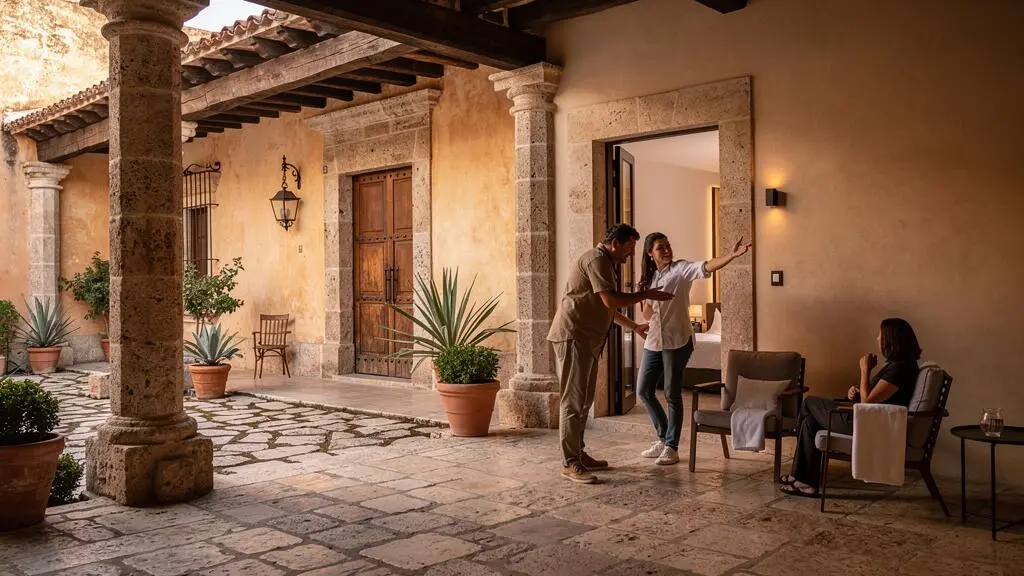
A restored Mexican hacienda can offer something a conventional luxury hotel cannot: the opportunity to stay within an estate shaped by centuries of regional history. But atmospheric courtyards, antique-looking furniture and dramatic photographs do not establish that a property delivers a meaningful heritage experience.
For UK travellers, the central question is whether the premium buys something tangible. That might mean access to genuinely historic buildings, knowledgeable interpretation, regional cuisine and a distinctive setting. Alternatively, it might buy attractive interiors alongside inconvenient transport, restricted facilities and little to occupy a second day.
The strongest bookings balance three things: credible heritage, usable hospitality and realistic total cost. None can be judged from the headline room rate alone.
Mexico’s estates also differ considerably. A former henequen-producing hacienda in Yucatán is not interchangeable with a sugar estate in Morelos or a property near a historic city. Their architecture, surroundings, histories and practical appeal require separate consideration.
Before paying extra for colonial atmosphere, establish exactly what is original, what guests can actually experience and what the location will demand of your itinerary.
What makes a Mexican hacienda stay worth paying for?
- Documented heritage: Prefer identifiable historic structures, credible restoration information and meaningful access over decorative colonial styling.
- Practical value: Compare the full cost of accommodation, transport, meals and activities with the experiences you can realistically enjoy.
- Booking evidence: Verify your exact room, recent guest complaints, event restrictions and seasonal service availability before committing.
- Why Do Some Restored Haciendas Feel Like Living History While Others Feel Like Themed Hotels?
- How to Vet a Hacienda Stay in Mexico Before Booking Using 5 Review Red Flags
- Which Suits You Better: A Remote Hacienda Stay or a City-Edge Colonial Estate?
- The Hacienda Booking Mistake That Leaves You Stranded With Nothing to Do for 2 Days
- When Should You Book a Hacienda Stay for Lower Rates and Better Weather in Mexico?
- How to Vet a Mexican Boutique Hotel Listing Using 4 Clues Beyond Star Ratings?
- How to Read a Hacienda’s Layout to Understand Its Real History in Under 20 Minutes?
- Why Some Historic Haciendas in Mexico Have a Dark Past That the Tour Doesn’t Mention
Why Do Some Restored Haciendas Feel Like Living History While Others Feel Like Themed Hotels?
Restored haciendas feel like living history when their surviving architecture, documented former purpose and interpretation reveal how the estate once functioned. Themed hotels primarily recreate the appearance of that past. Both may offer comfortable accommodation, but only the former provides a substantial heritage experience that could justify paying more than for a similarly equipped conventional hotel.
The difference begins with provenance. A genuine former working estate should have an identifiable historical function, even if individual buildings have been extensively adapted. In Yucatán, for example, nineteenth-century henequen production transformed many agricultural and livestock properties. Their arrangements could include an owner’s residence, production buildings, chapels and workers’ accommodation, as described in the Yucatán government’s historical overview of haciendas.
That does not mean every attractive archway is original. Courtyards may have been reconstructed, guest rooms added recently and traditional-looking finishes installed during conversion. A hotel may occupy a historic estate while offering most overnight accommodation in contemporary buildings.
Ask which structures survive from the property’s working period and which have been substantially rebuilt. Restoration documentation, dated photographs and a clear account of building phases are more convincing than phrases such as « timeless colonial elegance ».
Architectural integrity and modern comfort are not opposites. Preserved limestone walls, traditional circulation routes and former agricultural buildings can coexist with discreet plumbing, reliable cooling and appropriate accessibility improvements. The important question is whether adaptation respects meaningful historical features while meeting your needs.
Consider what the premium actually delivers. Does the booking include entry to former production buildings? Can guests explore original courtyards? Are there informative tours, credible historical materials or knowledgeable staff who explain the estate’s development?
Regional cooking and relationships with nearby communities can add substance, but claims about local authenticity need examples: identifiable dishes, named partnerships or specific opportunities to learn about the surroundings.
A property that preserves only its façade may still be a pleasant hotel. It simply offers a different proposition from an estate where the architecture and history remain central to the experience.
Once the property’s heritage credentials are reasonably clear, the next test is whether recent guests actually receive the experience its marketing promises.
How to Vet a Hacienda Stay in Mexico Before Booking Using 5 Review Red Flags
The five most revealing hacienda review warnings concern inaccessible historic areas, uncomfortable converted rooms, disruptive private events, restricted dining and experiences that are advertised but unavailable. These problems matter because they directly affect what makes an estate stay distinctive. A single negative review is weak evidence; recurring, recent accounts describing the same limitation deserve closer investigation.
Start with reviews that describe actual stays rather than simply praising the architecture. An excellent photograph of a courtyard tells you little about whether ordinary overnight guests could use it throughout their visit.
- Historic spaces are inaccessible. Multiple guests mention locked buildings, closed courtyards or heritage areas reserved for private functions. Ask precisely which structures overnight guests may visit.
- Converted rooms are uncomfortable. Reports repeatedly mention dampness, poor ventilation, inadequate cooling, intrusive noise or unreliable hot water. Check whether the complaints concern your intended room category.
- Private events dominate the estate. Weddings or corporate functions repeatedly interrupt access to the pool, gardens or dining spaces. One isolated event is less significant than an established operating pattern.
- Dining is unexpectedly restrictive. Guests describe limited opening hours, fixed meal arrangements or an inability to obtain dinner without advance notice. This becomes especially important at isolated properties.
- Promised experiences cannot be booked. Tours, spa treatments or cultural activities appear in promotional descriptions but are routinely unavailable to ordinary guests or require additional payment.
Review timing matters. Compare recent comments across more than one booking platform and, where possible, match the same room type, season and length of stay. An old complaint about a facility later renovated should not automatically outweigh several newer accounts describing improved conditions.
Traveller priorities also explain apparent contradictions. A couple seeking uninterrupted quiet might celebrate a secluded estate that another visitor calls boring. Identify whether reviewers travelled with a car, wanted excursions or expected conventional resort entertainment.
Use guest photographs to check whether the advertised pool, courtyard or bedroom resembles what visitors actually encountered. Then contact the property about repeated concerns, requesting concrete answers rather than general reassurance.
For example, ask whether a wedding is scheduled during your dates and whether it will affect the pool or restaurant. A clear written reply resolves more uncertainty than a collection of conflicting star ratings.
Five checks to complete before paying a hacienda deposit
- Compare recent reviews across at least two platforms and save a short note identifying complaints that recur.
- Match guest photographs to the selected room category and retain a screenshot showing the room you expect.
- Request written confirmation of access to the historic buildings, pool and gardens; keep the reply with your booking records.
- Confirm dining hours, event restrictions and activities for your actual dates; create a list of what is guaranteed and what requires booking.
- Record the complete payable price, cancellation deadline and transport arrangements in a single booking summary.
Even a property with consistently positive reviews can be the wrong choice if its location prevents you from enjoying the wider region.
Which Suits You Better: A Remote Hacienda Stay or a City-Edge Colonial Estate?
A remote hacienda generally suits travellers who want extended relaxation, quiet grounds and time spent primarily on the estate. A city-edge colonial property is often better for visitors prioritising restaurants, museums and independent sightseeing. Neither setting is inherently better value: the right choice depends on transport, available nights and how much of the holiday you intend to spend on-site.
Remote estates can create a compelling sense of separation from ordinary tourism. Landscaped grounds, former agricultural buildings and quieter surroundings may justify staying in for much of the day. But isolation has an opportunity cost when your main interests lie elsewhere.
Properties near cities can allow easier exploration without requiring every excursion to be arranged through the hotel. Their heritage experience may feel less secluded, particularly where nearby roads and development affect the atmosphere.
Compare the practical differences before choosing:
| Decision factor | Remote hacienda | City-edge colonial estate |
|---|---|---|
| Driving | Often more useful or necessary for independent outings | May offer more transport alternatives |
| Spontaneous exploration | Usually requires more planning | Potentially easier access to nearby attractions |
| Short stays | Best when the estate itself is the destination | More flexible for mixed sightseeing itineraries |
| Time spent on-site | Most appealing when relaxation is a priority | Suitable when accommodation is a base for outings |
| Additional expenses | Transfers, meals and arranged excursions may matter more | Local transport and external dining remain relevant |
Consider four personal variables: willingness to drive, desire for spontaneous exploration, nights available and tolerance for spending most of the day at the property. A secluded estate may be ideal for a couple seeking quiet evenings but frustrating for travellers attempting to cover several historic sites.
Distance is not the same as accessibility. The Government of Canada‘s Mexico travel advice notes that road conditions vary considerably and that rural telecommunications can be unreliable. Its guidance on Mexican roads and rural connectivity supports checking more than the distance displayed on a booking map.
Test journeys between the property and your intended destinations. Check the final access road, realistic travel times, available transport providers and whether journeys would involve travelling after dark. UK visitors should also check current Foreign, Commonwealth & Development Office advice for the particular Mexican state and planned route.
Finally, compare the full cost. Add accommodation, necessary transfers, likely meals and feasible excursions. Then ask how much enjoyable, unhurried time each option provides.
A lower nightly rate loses its advantage when reaching the places you most want to see becomes costly or impractical.
Once the location fits your travel style, establish whether the estate provides enough confirmed experiences to justify your intended length of stay.
The Hacienda Booking Mistake That Leaves You Stranded With Nothing to Do for 2 Days
The costly mistake is booking several nights because a hacienda looks expansive, without checking how guests can actually spend their time. Grand architecture does not guarantee a functioning spa, regular guided activities or accessible grounds. An isolated estate may provide an excellent short retreat yet become restrictive when dining, transport and excursions all require advance arrangements.
The practical distinction is between spaces that look impressive and facilities that sustain an enjoyable stay. A beautiful courtyard may occupy considerable space in promotional photography, yet be explored relatively quickly. A garden with accessible walking routes, a regularly operating spa or guided historical visits may offer more lasting value.
Before booking two nights, undertake a two-day experience audit. Sketch morning, afternoon and evening activities for each day, using only services you have confirmed.
For example, imagine a hypothetical remote estate where guests can use the gardens, dine on-site and book a guided heritage visit. The first day might comfortably include arrival, a walk, dinner and an evening in the courtyard. But if the guided visit is unavailable the following day and there are no nearby dining or transport options, the second day could feel much less rewarding.
This is a planning illustration, not evidence about any particular Mexican property.
Pay particular attention to dependencies. A restaurant might operate only during specified hours. An excursion might require advance reservations. A taxi service might not be readily available. Each limitation may be manageable alone; combined, they can make an otherwise attractive location inconvenient.
Without a rental car, the consequences become more significant. Ask whether return transfers can be arranged, how much notice drivers require and what happens if an activity is cancelled or delayed.
For travellers seeking cultural exploration alongside relaxation, a shorter estate stay within a regional itinerary can be more effective than committing every night to one secluded property.
One night may provide enough time to enjoy the architecture and atmosphere. A longer stay makes sense when confirmed facilities, excursions or the desire for deliberate downtime justify it. Neither duration should be treated as universally correct.
After confirming that the experience suits your schedule, the remaining question is whether your travel dates preserve the activities that make the property appealing.
When Should You Book a Hacienda Stay for Lower Rates and Better Weather in Mexico?
The best booking period depends on the hacienda’s region, altitude, climate and operating schedule. Mexico does not have one universally ideal season for estate stays. Lower rates offer genuine value only when conditions still allow you to enjoy the courtyards, gardens, historic buildings and activities that motivated the booking.
Yucatán properties face different considerations from estates in central Mexico. Heat and humidity can affect daytime enjoyment of exposed grounds in the peninsula, while higher-altitude destinations may experience cooler evenings and different rainfall patterns.
These differences matter more in heritage accommodation than travellers sometimes anticipate. Thick masonry, open courtyards and traditional circulation routes can provide distinctive atmosphere, but room comfort still depends on the actual building, ventilation and installed amenities.
Heavy rain may reduce the appeal of outdoor dining and garden walks. Strong daytime heat may make an unshaded courtyard less enjoyable. Cooler evenings can also matter where bedrooms are located in older structures with limited temperature control.
Rather than relying on a nationwide high-season or low-season label, examine regional climate information for your chosen dates and identify which activities depend on the weather.
For price comparisons, select several plausible arrival dates and compare the same room category under equivalent booking conditions. Keep cancellation terms, meal inclusions and occupancy consistent so that differences reflect the offer rather than different products.
Look beyond international holiday patterns. Local festivals, school holidays, weddings and private events can influence availability at individual estates. A property hosting frequent events may have demand patterns that differ from nearby conventional hotels.
There is no reliable universal number of weeks or months before arrival that guarantees the lowest hacienda rate. Flexible dates and direct verification are more useful than a rigid booking-window rule.
Off-peak savings also require a service check. Confirm whether the restaurant operates normally, the pool is available, guided tours run and weather-dependent experiences can be arranged.
If the main reason for your visit is a heritage tour that runs only on certain days, the cheapest available room night may not be the best purchase.
The same principle applies to the booking listing itself: a competitive rate is meaningful only when the exact room, charges and included services are clear.
How to Vet a Mexican Boutique Hotel Listing Using 4 Clues Beyond Star Ratings?
A Mexican boutique hotel listing is most credible when it identifies the exact accommodation, shows the full payable price, supports its historical claims and clearly describes included services. Star ratings cannot establish those details. For restored haciendas, the difference between the photographed showcase suite and the room actually reserved can substantially change the value of the stay.
Review these four listing-level clues before deciding whether the property deserves its asking price.
- Exact room identity. Terms such as « historic suite », « colonial room » and « garden room » may describe different buildings, construction periods and comfort levels. Match the selected category with identifiable photographs, its location and, where available, a floor plan.
- Full price transparency. Check the final amount payable, applicable taxes, service charges, mandatory extras, cancellation conditions and meal arrangements. For UK travellers, note whether the price is quoted in Mexican pesos, pounds sterling or another currency, and whether the booking platform or payment provider applies a conversion.
- Specific historical information. Look for an identifiable former estate function, a credible account of restoration and clarity about which buildings are original, reconstructed or modern. Generic claims about colonial charm provide little evidence.
- Clear service inclusions. Establish whether breakfast, guided visits, spa access, airport transfers or other advertised experiences are included, optional, restricted or subject to advance booking.
Mexico’s consumer protection framework provides useful context for price transparency. Article 7 Bis of Mexico’s Federal Consumer Protection Law addresses disclosure of the total payable amount, including applicable additional charges. The supplied legislative text should not be treated as confirmation of the law’s latest amendments, nor assumed to govern every foreign platform arrangement identically.
For an international booking, verify the payable total at checkout and retain the conditions supplied by the contracting provider. Do not assume that a price converted into pounds is guaranteed until payment has been processed under the relevant terms.
Photographic transparency is equally important. A credible listing should show ordinary guest accommodation, bathrooms and circulation areas as well as its most attractive courtyard. Ask whether the room you intend to reserve is inside the historic building or a newer extension.
Written confirmation is particularly valuable when a room category has few photographs or when heritage access is a central reason for choosing the property.
A booking page can establish what is being sold, but understanding what the architecture actually represents requires looking at the estate itself.
How to Read a Hacienda’s Layout to Understand Its Real History in Under 20 Minutes?
A short architectural walk can reveal how a hacienda was organised by examining the relationship between its principal residence, courtyards, former production buildings and service spaces. Differences in materials and circulation routes may indicate successive building phases. These are interpretive clues, not proof of construction dates or historical events, and should be checked against documented property history.
Start with a simple question: What did this estate originally produce? That answer provides context for interpreting its surviving layout.
In Yucatán, former henequen estates may retain features connected with fibre production, alongside residences, chapels and workers’ housing. Sugar estates in Morelos may have different production-related structures. Agricultural and livestock properties elsewhere may preserve storage areas, animal-related facilities or other working spaces.
These examples illustrate regional differences, not a universal architectural blueprint.
A practical 20-minute introductory walk can be organised as follows:
- First five minutes: Locate the principal residence and main courtyard. Observe how prominent rooms, entrances and circulation routes relate to one another.
- Next five minutes: Identify surviving production, storage or service buildings. Consider whether their scale and arrangement suggest the former economic function of the estate.
- Next five minutes: Compare materials, masonry, openings, floor levels and repaired surfaces. Note where construction appears different without assuming which section is oldest.
- Final five minutes: Check interpretive signs, available historical plans and guest access. Record which spaces can be entered and which can only be viewed from outside.
Look for transitions between weathered masonry and newer finishes, changes in doorway proportions and differences in how people move between buildings. Such contrasts can suggest alterations, but visual appearance alone cannot distinguish every original feature from a careful reconstruction.
The value of this exercise lies partly in what guests cannot access. A large estate may retain impressive façades while keeping most historically important interiors closed. A smaller property with well-explained rooms and surviving production spaces may provide a more informative encounter.
Ask staff whether historical plans, conservation reports or guided explanations are available. Compare what you observe with the estate’s documented construction and restoration history, rather than assigning dates from appearance alone.
Understanding who occupied different spaces also leads to a more difficult question: whose experiences are represented in the estate’s modern heritage story?
Key takeaways before making a heritage-led booking
- A carefully preserved building is not necessarily accompanied by a complete or balanced account of its history.
- Former working and residential spaces deserve attention alongside the owner’s residence and decorative courtyards.
- Thoughtful interpretation of difficult history can add genuine cultural value without preventing a property from offering comfortable hospitality.
Why Some Historic Haciendas in Mexico Have a Dark Past That the Tour Doesn’t Mention
Some historic Mexican haciendas have difficult histories involving concentrated land ownership, unequal labour relations and forms of worker dependency. Modern hospitality presentations may emphasise architecture and restoration while giving less attention to the people whose labour sustained these estates. These histories varied significantly by region and period, so individual properties require evidence rather than assumptions based on their appearance.
Haciendas were not simply grand rural residences. Many were productive enterprises whose wealth depended on land, agricultural activity and organised labour. Their buildings reflected both economic operations and social hierarchies.
In Yucatán, academic research offers specific evidence of these relationships. The Journal of Economic History study of labour and debt on Yucatán haciendas, by Lee J. Alston, Shannan Mattiace and Tomas Nonnenmacher, examines land rights, Maya workers and labour arrangements during 1870–1915.
The study discusses how accumulated debt could bind workers to estates within paternalistic labour relationships. It provides a historically specific basis for examining coercion and dependency, not evidence that every Mexican hacienda operated in precisely the same way.
That distinction matters. The history of a former henequen estate cannot simply be imposed on a sugar-producing property in another region or a hacienda established under different economic conditions.
Heritage tours may give considerable attention to the owner’s residence, family collections and architectural restoration. Yet the estate’s story may also involve agricultural workers, Indigenous communities, production buildings, changes in land ownership and the consequences of economic restructuring.
A more comprehensive interpretation acknowledges those dimensions when supported by reliable research. It does not require visitors to abandon appreciation of historic architecture; it places that architecture in its social and economic context.
Visitors can explore these questions respectfully. Ask what the property originally produced, how labour was organised, which buildings were used by workers and whether historical records inform the tours.
Hotel employees may not have specialist historical training. An incomplete answer is therefore a reason to look for additional documentation, not automatic proof that management is deliberately concealing evidence.
The property’s present relationship with surrounding communities also deserves examination. Specific local employment arrangements, community-led activities and documented preservation partnerships are more informative than unsupported claims of cultural authenticity.
Preservation is not the same as romanticisation. A historically complex estate can still be a worthwhile place to stay, particularly when its operator maintains significant structures and approaches difficult history with care.
A heritage premium becomes more defensible when visitors receive access to historic spaces, credible interpretation and an experience grounded in the property’s actual past rather than a selective fantasy of colonial luxury.
Before booking, compare the final two or three properties using written evidence of their heritage, confirmed room and facility access, transport requirements and total payable cost. Choose the estate whose documented substance and practical experience best match the holiday you actually want, even if it is not the most photogenic option.
Is a restored Mexican hacienda usually more expensive than a conventional hotel?
Not necessarily. Rates depend on the property, room category, location, travel dates and services included. A heritage premium is worth considering only when the estate offers meaningful benefits that you value, such as accessible historic architecture, distinctive grounds or informative experiences. Compare equivalent booking conditions rather than assuming that a historic setting always costs more.
Can you stay in a historic hacienda without hiring a car?
Yes, where dependable transfers and suitable on-site services are available. However, remote estates can restrict independent exploration when transport is difficult to arrange. Confirm airport transfers, return journeys, excursion transport and dining options before booking. A property near a city may be more practical for travellers who prefer not to drive.
Does a UNESCO designation mean a hacienda hotel is an authentic heritage property?
No. A property located within or near a UNESCO-listed area should not be assumed to have an individual UNESCO designation. The scope of any heritage recognition must be checked separately. Such recognition also does not establish the quality of hotel restoration, room comfort, historical interpretation or guest access.
What should travellers with limited mobility ask before booking an old hacienda?
Ask about step-free access, bedroom location, bathroom configuration, paving surfaces, distances between facilities and accessibility of dining areas and historic spaces. Preserved architecture may include uneven floors or stairs, but accessibility varies by property and restoration. Request photographs and written confirmation for your specific requirements rather than relying on a general accessibility label.
Is it better to book a Mexican hacienda directly or through an international booking platform?
Neither route is automatically preferable. Compare the same room category, total payable price, cancellation terms, payment currency and included services. Direct booking may make detailed questions about heritage access and activities easier to resolve, while platforms may provide useful comparison and reservation-management features. Keep written confirmation of the exact conditions, regardless of the booking channel.