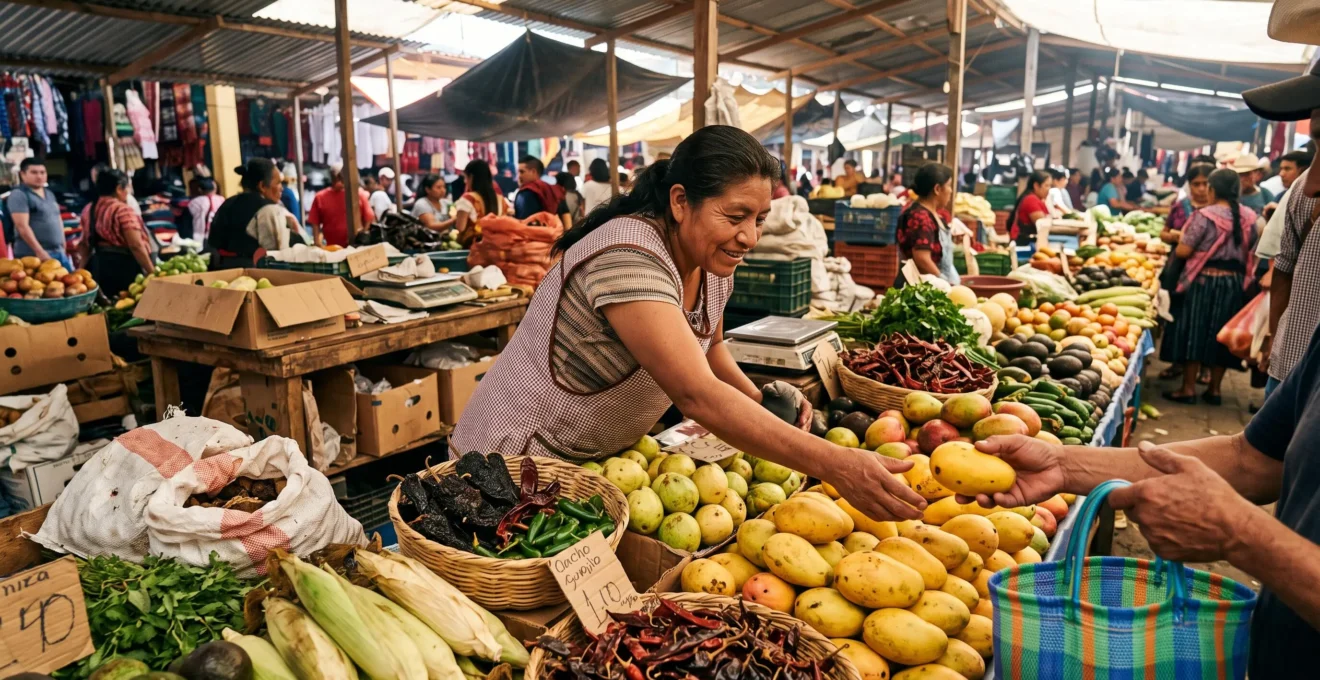
A trip to Mexico in January can reveal coffee pickers working through ripe cherries in the highlands. Visit another growing region in May, and the agricultural experience may centre on mangoes or cacao rather than coffee. The destination has not changed, but the agricultural calendar has transformed what travellers can encounter.
Mexico’s harvest seasons are shaped by altitude, rainfall, geography and the crops grown in each region. For travellers interested in food, these rhythms can be more useful than conventional holiday calendars. Visiting at the right moment makes it possible to observe agricultural work, explore seasonal produce and understand how ingredients move from farms into markets, kitchens and export supply chains.
The most effective approach is to choose a crop and region before choosing travel dates. Coffee and cacao offer particularly rewarding opportunities, but their growing areas, harvest patterns and processing stages differ. A flexible itinerary, combined with confirmation from local producers, turns agricultural seasonality into a practical way to experience Mexico.
Mexico harvest travel at a glance
- November to March: The main national coffee-cherry harvest period and an important cacao harvesting window, although individual farm schedules vary.
- April to August: Mexico’s principal mango production months, with cacao harvesting also possible in some growing areas.
- Best planning strategy: Combine a confirmed working-farm visit with regional markets and producer-led tastings rather than relying on a national harvest calendar alone.
- Why Does the Same Market in Mexico Sell Completely Different Produce 3 Months Apart?
- How to Time Your Mexico Trip Around Coffee Harvest for the Freshest Farm Tastings?
- Which Gives a Better Harvest Experience: Visiting a Farm or Shopping a Peak-Season Market?
- The Timing Mistake That Makes Travellers Arrive at a Coffee Farm With Nothing to See
- In What Order Should You Visit Mexican Agricultural Regions to Follow the Harvest South to North?
- When Should You Visit a Mexican Coffee or Cacao Farm to See the Harvest in Action?
- How to Find the Coffee and Cacao That Mexico Exports Without Leaving the Country?
- Why the Coffee You Drink in Mexico Might Not Be the Best They Grow, and Where the Good Stuff Goes
Why Does the Same Market in Mexico Sell Completely Different Produce 3 Months Apart?
The same Mexican market can offer noticeably different produce three months apart because crops follow overlapping agricultural calendars. Altitude, rainfall, temperature and regional growing conditions affect when ingredients reach their harvest peaks. A market visited during the main coffee season may therefore offer a different seasonal experience from the same destination during mango production months.
Mexico does not operate under one uniform agricultural season. Its official agricultural calendar distinguishes spring-summer and autumn-winter production cycles alongside perennial crops. Spring-summer planting generally occurs from March to September, while autumn-winter planting extends from October to March. Harvest periods overlap, and perennial crops follow their own patterns.
These differences matter in places such as Oaxaca, where highland and lower-elevation agricultural areas supply markets through different growing cycles. November and February can bring different supplies, volumes and varieties even though both months fall within the main national coffee-harvest period.
The following guide separates documented national harvesting periods from crops whose local timing needs further verification.
| Ingredient | Indicative harvest period | What travellers should consider |
|---|---|---|
| Coffee cherries | November–March is the main national harvest | Actual picking weeks vary by growing region and farm. |
| Cacao pods | October–March and May–August are two broad harvesting periods | Confirm harvesting and processing activity with individual producers. |
| Mangoes | April–August is the principal national production period | Local availability depends on growing region and variety. |
| Guava | Region-dependent; no specific window established by the supplied evidence | Ask which nearby growing areas are currently supplying the market. |
| Maize | Depends on the agricultural cycle and region | Fresh ears, dried grain and stored maize represent different stages. |
| Chiles | Depends on variety, growing region and production cycle | Fresh, dried and stored chiles should not be treated as equivalent seasonal indicators. |
The distinction between availability and actual harvest is crucial. A stall overflowing with dried chiles or maize does not necessarily indicate nearby harvesting that week. Products may have been stored or transported from another state.
For a more accurate impression, ask vendors where their produce was grown, whether they cultivate it themselves and when the local harvest began. A temporary increase in locally grown produce, repeated across several stalls, is more informative than abundance at one reseller’s stand. Price changes can provide clues, but are not proof of seasonality.
The country’s overlapping cycles are documented in Mexico’s official agricultural calendar. It provides a useful starting point for comparing crops, although national information cannot predict an individual market’s stock.
For travellers, the important distinction is between tourist season and harvest season. Popular holiday dates may coincide with some harvests, but they do not guarantee the most interesting agricultural activity for a particular ingredient.
Once a target ingredient is identified, the next decision becomes more precise: which region should be visited, and at what stage of production?
How to Time Your Mexico Trip Around Coffee Harvest for the Freshest Farm Tastings?
Plan a Mexican coffee-harvest trip primarily between November and March, then narrow the dates to a particular growing area and farm. Chiapas, Veracruz and Puebla are important coffee-producing states, but their individual farms do not necessarily harvest simultaneously. For the most informative tasting, confirm whether the visit will include picking, processing, roasting or a structured cupping session.
Mexico’s agricultural authorities report that national coffee-cherry harvesting is concentrated at least 90 % between November and March. Their monthly distribution places substantial harvesting activity in December, January and February, making these months particularly useful initial candidates.
At least 90%
Share of Mexico’s national coffee-cherry harvest concentrated between November and March, according to the Mexican agricultural authority. This is a national distribution, not a guarantee for individual farms.
Mexican Ministry of Agriculture’s overview of coffee production
Chiapas, including the Soconusco growing area, offers opportunities to explore coffee agriculture in southern Mexico. Veracruz and Puebla provide other important coffee-growing landscapes. Nayarit can also be investigated for a western Mexico itinerary, but its specific picking calendar needs producer confirmation rather than extrapolation from national figures.
Altitude is one important variable because temperature and cherry maturation differ across growing environments. Rainfall, variety, exposure and annual weather also affect timing. A regional average is therefore less useful than a current answer from the finca itself.
The experience changes significantly as coffee moves through production. Picking reveals how cherries are selected. Depending on the processing method, subsequent work may include depulping, fermentation, washing and drying. Drying requires its own timetable before coffee is prepared for storage, roasting and tasting.
Freshly picked coffee is not the same as freshly roasted coffee. Visitors during harvest may taste coffee from an earlier lot while observing the current crop being processed. This is normal and worth asking about, especially when a tasting is advertised as featuring the new harvest.
For booking, contact a finca directly if its visitor arrangements are clear, or use a cooperative or specialist operator able to communicate with producers. Ask which stages will be active during the exact dates and whether a tasting is included.
Seasonal food can shape the surrounding itinerary. Explore nearby markets for locally harvested ingredients rather than assuming coffee and mangoes will be at peak production simultaneously. Their main national harvesting periods differ.
A worthwhile coffee trip combines observation of current agricultural work with an explanation of how beans from previous or recent harvests become the coffee served in the cup.
Which Gives a Better Harvest Experience: Visiting a Farm or Shopping a Peak-Season Market?
A farm visit is better for understanding how food is grown, harvested and processed, while a peak-season market is better for discovering the variety of ingredients available across a region. Farms offer depth but require more planning. Markets provide flexibility and broader food exposure. Combining both usually gives travellers a more complete picture of Mexican agriculture.
The choice depends on what a traveller wants to learn. Watching coffee cherries being collected reveals labour, ripeness selection and production constraints that cannot be seen in a café. A market reveals how agricultural ingredients are traded and used in everyday food culture.
Neither format automatically guarantees authenticity. An advertised farm experience may be a demonstration rather than observation of active harvesting. Likewise, a traditional market may be dominated by resellers whose produce comes from several states.
| Criterion | Working farm | Peak-season market |
|---|---|---|
| Depth of interaction | Potentially detailed discussions with growers and processors | Short conversations across multiple vendors |
| Cost | May involve a tour fee, transport and guiding | Often accessible without a formal entry arrangement; purchases are optional |
| Time required | Allow substantial time for travel and the visit | Can fit into a single morning |
| Language needs | Advance communication and translation may be useful | Basic Spanish is helpful for informal exchanges |
| Sensory experience | Plants, harvesting, processing and potentially tasting | Produce, aromas, prepared foods and regional variety |
| Seasonal certainty | Activity depends on the farm’s production schedule | Produce may come from other regions or storage |
For a hypothetical four-day stay in a coffee-growing region, a practical combination would be one confirmed farm visit followed by two shorter market visits. The first market can establish which ingredients are available; the farm provides the production context; the final market offers an opportunity to compare what has been learned.
Travellers with limited time should prioritise accessibility and meaningful interaction rather than simply counting stops. A single producer conversation can be more informative than several rushed visits.
Adding a cooperative tasting session can provide a third perspective: how agricultural products are evaluated and sold after leaving the field. It is particularly useful when visitors want to understand why two coffees grown in the same region can taste different.
The strongest itinerary treats farms, markets and tasting rooms as complementary parts of one food system, not interchangeable tourist attractions.
The Timing Mistake That Makes Travellers Arrive at a Coffee Farm With Nothing to See
The biggest scheduling mistake is assuming that Mexico has one fixed coffee-harvest season and that every farm is actively picking throughout it. National statistics describe broad production patterns, not individual daily schedules. A tour booked months ahead without checking the farm’s actual activities may coincide with flowering, empty processing areas or a quiet period between picking rounds.
A finca can be open to visitors throughout the year while offering very different agricultural experiences. During active picking, visitors may observe workers selecting cherries and moving harvested fruit into processing. Outside that period, the same location may mainly offer a plantation walk or an educational tasting.
Even within the principal national harvest period, the exact week matters. Weather, crop maturity and labour scheduling can shift activity. Picking may occur in rounds rather than continuously, and processing spaces may be operating at different times from field teams.
The solution is to confirm what visitors will actually observe, not merely whether a tour is available.
Five checks before booking a Mexican coffee-harvest visit
- Identify the production site: Record the finca’s location, growing area and contact details in a travel note.
- Request a stage-specific forecast: Ask whether picking, wet processing or drying is expected during your chosen week, and save the response.
- Verify visitor access: Obtain confirmation of which working areas visitors may enter and which activities they can observe.
- Confirm the daily schedule: Record an agreed arrival time and the practical transport arrangements.
- Prepare an alternative: Identify a nearby cupping, roasting or market experience, and keep its details alongside the original booking.
If harvesting has finished, the visit does not have to be wasted. A producer may still be able to explain pruning, flowering, processing equipment or quality assessment. A cupping session can demonstrate differences between origins and processing methods even when there are no ripe cherries in the fields.
For flexible UK travellers, leaving some days uncommitted can be more valuable than a tightly booked sequence of agricultural tours. The ideal date should be confirmed close enough to travel for producers to assess current conditions, while allowing sufficient time to arrange transport.
Harvest travel becomes more reliable when expectations are tied to observable work rather than a generic seasonal label.
In What Order Should You Visit Mexican Agricultural Regions to Follow the Harvest South to North?
A south-to-north harvest journey can begin in the coffee-growing areas of Chiapas, continue through Oaxaca and reach Veracruz or Puebla, but there is no verified national progression that guarantees later harvests farther north. Altitude and local weather can interrupt the sequence. The safest itinerary follows confirmed farm activity rather than assuming that agricultural maturity advances neatly across Mexico.
Agricultural tourism often becomes more appealing when it connects several producing regions. Yet coffee, cacao and mangoes do not follow identical calendars, and their growing areas only partly overlap.
Chiapas and Oaxaca are important coffee-producing states. Veracruz and Puebla provide further opportunities to explore coffee production, while Tabasco is particularly relevant for cacao. Extending towards Nayarit requires additional planning because its local production timetable cannot be inferred from that of southern states.
For a hypothetical journey during the broad November-to-March coffee season, the following sequence offers a geographical structure rather than guaranteed harvest dates.
| Stage | Region | Primary agricultural focus |
|---|---|---|
| 1 | Chiapas | Confirm active coffee picking and processing; consider cacao where locally available. |
| 2 | Tabasco | Explore cacao cultivation and ask whether pod harvesting or post-harvest processing is underway. |
| 3 | Oaxaca | Combine confirmed coffee activities with regional food markets. |
| 4 | Veracruz or Puebla | Compare another coffee-growing environment and its processing methods. |
This is a planning model, not an established agricultural trail. In particular, moving from Tabasco into other states can involve substantial transfers, and the route should be adapted to available transport and current local conditions. There is no reason to visit every region if only one or two farms can confirm meaningful activity.
Choosing a primary crop simplifies the decision. Coffee provides a relatively concentrated national harvest period, while cacao offers two broad production windows. Travellers whose priority is mangoes should consider a different seasonal itinerary centred on suitable producing areas.
A route driven exclusively by harvesting precision can become unnecessarily demanding. The better strategy is to fix a small number of anchor experiences while preserving flexibility around regional transfers.
A shorter journey through fewer growing areas may reveal more about agriculture than a long route designed around unverified calendar assumptions.
When Should You Visit a Mexican Coffee or Cacao Farm to See the Harvest in Action?
For coffee, November to March is the strongest national starting window, particularly in major producing states such as Chiapas, Veracruz and Puebla. For cacao, Mexican agricultural guidance identifies two broad harvesting periods: October to March and May to August. To see actual picking or processing, travellers must still confirm the current production stage and daily schedule with the farm.
These crops require different kinds of observation. Coffee grows as cherries that are picked and subsequently processed to obtain beans for drying and roasting. Cacao grows in pods that are opened to remove seeds and pulp before fermentation and drying.
Mexico’s agricultural information service identifies cacao production primarily in southern and southeastern areas, including Tabasco and Chiapas. Its published guidance distinguishes two broad cacao harvest periods rather than a single short season.
Those windows are described in the Mexican agricultural information service’s article on cacao, published in September 2019. They should be treated as general historical guidance, not a verified forecast of activity at a particular farm in 2026 or 2027.
Travellers should distinguish three experiences:
- Harvest observation: Watching coffee cherries picked or ripe cacao pods collected and opened, where access is permitted.
- Post-harvest processing: Seeing activities such as coffee depulping, fermentation where used, or the fermentation and drying of cacao seeds.
- Post-harvest education: Exploring growing practices, tasting products and learning about quality even when harvesting has paused.
Timing within the day also matters. Field activity, processing and visitor access may follow different working hours. Some small farms only receive guests by arrangement, so arrival times should be agreed in advance.
A working visit is most informative when visitors can observe genuine production: freshly harvested fruit arriving for processing, staff tending drying areas, or workers undertaking scheduled field tasks. These are useful signs of activity, although they do not establish the quality of the final product.
Different coffee-processing methods also produce different sights. Not every farm ferments coffee in tanks or dries whole cherries on patios. A washed-coffee operation and a natural-processing operation may look quite different despite handling the same harvest.
Ask the producer what is happening that day, whether the activity is regular farm work and how visitors can observe without interrupting it.
Seeing a harvest in action is less about finding a famous farm than arriving when the farm’s actual production schedule matches the experience you want.
How to Find the Coffee and Cacao That Mexico Exports Without Leaving the Country?
Travellers can look for export-oriented Mexican coffee and cacao through producer cooperatives, farm shops, specialist roasteries, cupping rooms and traceable chocolate makers. Rather than assuming a premium product must be exported, ask about origin, producer identity, processing and the particular lot. These details provide a more reliable basis for judging quality and provenance than marketing claims alone.
Mexico exports coffee to markets including the United States and the United Kingdom. Yet the existence of international demand does not mean all outstanding coffee leaves the country or that domestic consumers cannot access comparable products.
For travellers interested in sourcing, the main distinction is between an ordinary retail label and a product whose origin can be explained clearly.
| Channel | What it can offer | What to ask |
|---|---|---|
| Producer cooperative | Connections with growers and potentially identifiable production lots | Which members produced this coffee or cacao? |
| Farm shop | Direct information about cultivation and processing | Was this product grown and processed here? |
| Specialty roastery | Roast information, origin details and guided tastings | Which harvest and lot does this coffee come from? |
| Specialty café | Opportunities to taste named origins without travelling to every farm | Who roasted this coffee, and can its origin be traced? |
| Bean-to-bar chocolate maker | Information about cacao origins, fermentation and chocolate production | Which producers supplied the cacao beans? |
In Mexico City or Oaxaca, specialist cafés and roasters can be useful starting points for travellers who cannot visit remote agricultural areas. In growing regions, producer-led establishments may provide more direct explanations of farming and processing.
Traceability is not a guarantee of superior flavour, but it makes claims more testable. Look for information about the producer or cooperative, growing region, harvest period and processing method. For roasted coffee, the roasting date is particularly relevant to the tasting experience.
Harvest timing also requires interpretation. Coffee cherries collected this week will not instantly become a finished roasted product. Processing, drying, preparation and roasting take additional time. Similarly, newly harvested cacao needs post-harvest treatment before it can become finished chocolate.
Consequently, a visit during harvest is especially valuable for observing production and asking about upcoming lots. It does not guarantee immediate access to finished products from that same harvest.
The goal is not simply to find something labelled premium or export quality, but to understand who produced it, how it was handled and why its flavour differs from another product.
Key takeaways before choosing your Mexican coffee experience
- International export destinations do not prove that the highest-quality Mexican coffee is unavailable domestically.
- A named producer, traceable lot and tasting opportunity are more useful indicators than a vague premium label.
- Harvest-season travel offers direct access to production knowledge, even when the latest crop has not yet reached the roasting stage.
Why the Coffee You Drink in Mexico Might Not Be the Best They Grow, and Where the Good Stuff Goes
The coffee served in an ordinary Mexican café may not represent the highest-quality beans grown locally because cafés buy according to price, supply, roasting style and customer demand. Some producers sell distinctive lots through export channels, while others supply specialist buyers within Mexico. Travellers seeking exceptional coffee should investigate producers and roasters rather than judging an entire region by one café.
The distinction begins with the coffee supply chain. Farmers may sell cherries, processed coffee or prepared green beans, depending on their operation and commercial relationships. Cooperatives, traders, roasters and cafés then make purchasing decisions that influence which products become available in different markets.
Specialty coffee buyers may be interested in particular origins, varieties, processing methods and sensory characteristics. Such lots can enter international markets, but they may also be sold to domestic roasters or directly by producers.
The available agricultural evidence establishes Mexico’s coffee production and international export markets. It does not establish that the country’s best coffee is systematically exported, that domestic cafés generally use inferior beans or that most specialty lots are sold abroad. These stronger claims require separate market evidence.
What can be said confidently is that a generic café experience is not a reliable measure of a producing region’s quality potential. Different beans, roasting methods, preparation techniques and storage conditions can produce very different cups.
Travellers can explore that variation by comparing coffees with identifiable origins. At a specialty roastery, asking for two contrasting Mexican lots may reveal how processing and roasting affect flavour. At a cooperative, conversations with producers can connect those differences to cultivation and post-harvest decisions.
A cupping session offers another way to compare coffees under more consistent preparation conditions. It is especially informative when the host can explain the origins of the samples and distinguish confirmed production information from tasting preferences.
Harvest season adds another layer of understanding. Watching cherries collected or processed helps explain how labour, timing and agricultural decisions contribute to the finished product. Visitors may also learn how specific lots are selected for different buyers, without assuming that an export destination automatically signifies better quality.
For UK travellers, the most rewarding outcome may be discovering a coffee they genuinely enjoy and understanding its provenance, rather than searching for an undefined national best.
Choose one crop, identify a suitable producing region and contact a working farm or cooperative about its current activity. Then add a market visit and a tasting. That simple sequence transforms a conventional food holiday into an opportunity to understand Mexico’s agricultural landscape from harvest to cup.
Can you visit a Mexican coffee plantation outside harvest season?
Some coffee farms may offer educational visits outside their harvesting period, but visitor access must be confirmed individually. Off-season activities can include plantation walks, roasting demonstrations and tastings. Active cherry picking or processing should not be assumed.
Is Mexico’s dry season always the best time for agricultural tourism?
No. Agricultural tourism should be planned around the target crop and growing region rather than a general weather season. Coffee harvesting is concentrated nationally between November and March, while mango production is strongest between April and August. Local conditions and visitor access still require confirmation.
Should travellers book a coffee-harvest tour before leaving the UK?
Advance arrangements are advisable when a visit depends on rural transport, language support or access to a working farm. However, the activity should be reconfirmed closer to departure because harvesting schedules can change. Request a clear description of what will be observable rather than relying solely on the tour title.
Can travellers buy freshly harvested coffee directly from Mexican growers?
Some producers may sell their own coffee, but availability depends on the operation and stage of processing. Newly picked coffee cherries require further preparation before they become roasted beans. Ask whether the coffee offered comes from the current harvest or an earlier processed lot, and check any applicable requirements before bringing food products back to the UK.
How can visitors experience a harvest without taking part in farm labour?
Observation-focused tours, guided producer visits, processing demonstrations and cupping sessions can provide insight without requiring visitors to harvest crops. Ask about the farm’s visitor policy, photography permissions and safe access to working areas. Respecting producers’ schedules is an important part of a genuine agricultural experience.