Mexico grows coffee and cacao with remarkable flavour potential, yet the cup served at a hotel breakfast may tell you surprisingly little about what nearby farms produce. Some growers supply international speciality markets, where carefully selected and traceable lots can attract attractive prices. Other producers sell locally, and a growing network of Mexican roasters is making high-quality beans available within the country.
The distinction matters when travelling through Chiapas, Oaxaca, Veracruz or Tabasco. A plantation, a village market and a specialist café may each represent a different stage of the same agricultural economy. What reaches your table depends on processing, distribution, purchasing relationships and the people preparing it, not simply how close you are to the farm.
Understanding these connections changes how you travel. Rather than assuming everything locally produced is exceptional, or that the finest beans automatically leave Mexico, you can follow their origins, ask better questions and discover how the harvest shapes both regional livelihoods and the food you actually taste.
Mexican coffee and cacao: what travellers need to know
- Premium coffee can earn attractive prices through speciality export channels, but Mexican cafés and roasters also buy high-quality local beans.
- Choose traceable farm origins, clear processing information and opportunities to compare products rather than relying on packaging or tourist-shop prices.
- November to March is the main national harvest window for coffee and overlaps with significant cacao harvesting, although individual farm dates vary.
- Why Is the Best Mexican Coffee Often Exported Before Locals Can Buy It?
- How to Find the Coffee and Cacao That Mexico Exports Without Leaving the Country?
- Which Is Better for Understanding Mexican Agriculture: A Farm Tour or a Market Tasting?
- The Shopping Mistake That Makes Travellers Buy Reject-Grade Produce Thinking It’s Premium
- When Should You Visit a Mexican Coffee or Cacao Farm to See the Harvest in Action?
- How to Order a Cacao Drink in Mexico With Less Sugar Without Getting Blank Stares?
- How to Time Your Mexico Trip Around Coffee Harvest for the Freshest Farm Tastings?
- Why Visiting Mexico in Harvest Season Changes Everything You Eat, See, and Experience
Why Is the Best Mexican Coffee Often Exported Before Locals Can Buy It?
Some of Mexico’s most carefully processed coffee reaches international buyers because speciality markets can reward traceability, consistent quality and distinctive flavour. Export contracts offer certain producers access to buyers willing to pay for those characteristics. However, the idea that virtually all excellent Mexican coffee goes abroad is misleading: established domestic speciality businesses also purchase premium beans directly or through specialist roasters.
The economics begin with a distinction between commodity coffee and speciality coffee. Commodity markets largely organise transactions around standardised commercial grades, whereas speciality buyers may pay premiums for desirable sensory characteristics, processing consistency and identifiable origins. A cooperative or producer comparing buyers must weigh prices against processing costs, quality requirements, payment terms and commercial relationships.
Export-oriented supply chains can consequently influence which lots are available through particular local outlets. That does not mean that coffee remaining in Mexico automatically failed an export inspection. Domestic sales may reflect deliberate commercial decisions, longstanding relationships or demand from Mexican consumers.
A 2021 study of specialty coffee shops in Mexico examined purchasing decisions at 114 establishments. Its findings showed that domestic businesses can develop closer commercial connections with growers and intermediaries that support smallholder production. Oaxaca origin, value-added business models and supply-chain knowledge were among the factors associated with speciality purchasing.
114 coffee shops
The number examined in the study, based on data gathered mainly between 2018 and 2020. The research demonstrates domestic speciality-market activity but does not measure the proportion of Mexico’s best coffee exported.
Servín-Juárez and colleagues, Sustainability, 2021.
For travellers, the practical distinction is between a coffee’s agricultural origin and the channel through which it reaches the cup. In Mexico City, Oaxaca City and San Cristóbal de las Casas, specialist establishments provide opportunities to seek named farms, regional origins and information about roasting.
Ask whether a roaster publishes cupping information or explains the sensory qualities of a particular lot. Speciality assessments may use professional tasting scores, but a score should be interpreted alongside its methodology and the identity of the evaluator. Geographic indications and origin-related labels can provide information about provenance; they are not universal guarantees of superior taste.
The coffee-growing landscape can therefore look very different from the drinks served in nearby mainstream restaurants. The difference may reflect purchasing choices and preparation methods rather than an inherent shortage of good Mexican coffee.
Once the economic mechanism is clear, the more useful question is where to look for identifiable, carefully processed coffee without leaving Mexico.
How to Find the Coffee and Cacao That Mexico Exports Without Leaving the Country?
Look for specialist roasters, producer-run shops and farm visits that identify the origin and processing of their coffee or cacao. Ask for the farm or cooperative name, growing region, harvest period and processing method. These details help establish traceability, although they cannot guarantee that a product belongs to the same lot or grade as an export shipment.
A café roasting on-site can be particularly useful because staff may explain where their green coffee comes from, how it was processed and why a particular roast was chosen. However, roasting equipment alone does not establish quality. An experienced roaster sourcing from another specialist business may offer equally traceable products.
The geography of your trip provides a practical starting point. Different destinations make different parts of the supply chain easier to explore.
| Destination | What to investigate | Useful approach |
|---|---|---|
| San Cristóbal de las Casas, Chiapas | Highland coffee production and local speciality distribution | Compare named-origin coffees and enquire about producer or cooperative visits. |
| Oaxaca City | Regional coffee roasting and traditional cacao preparations | Combine a speciality café tasting with a market visit. |
| Veracruz and nearby coffee-growing areas | Connections between established coffee production and local retail | Ask roasters to identify the municipality and producer supplying their beans. |
| Villahermosa and Comalcalco, Tabasco | Cacao cultivation, processing and chocolate making | Explore the regional cacao-to-chocolate visitor route. |
Tabasco’s official Cacao-to-Chocolate Route connects locations including Cunduacán, Comalcalco and Paraíso. The tourism authority identifies estates such as Hacienda Jesús María and Hacienda La Luz as places associated with cacao cultivation and chocolate-making experiences.
Buying directly from a producer or cooperative can provide a clearer account of how a product was grown and handled. The trade-off is that visits require planning, available stocks may vary, and traceable premium products need not be cheaper than those sold through retailers.
When examining packaging, look beyond broad descriptions such as « Mexican coffee » or « artisan cacao ». Names such as Pluma Hidalgo, Sierra Norte and Soconusco may help narrow a product’s stated geographic origin, but the seller should be able to explain whether that name refers to cultivation, sourcing or processing.
A product without detailed origin information is less traceable, not necessarily an export reject. The strongest purchasing decision combines provenance, credible processing details and a tasting you actually enjoy.
Finding the product is only part of the discovery. To understand why its quality and price differ from another lot, compare what happens on the farm with what is offered at the point of sale.
Which Is Better for Understanding Mexican Agriculture: A Farm Tour or a Market Tasting?
A farm tour is better for understanding how coffee or cacao is grown, harvested and processed. A market tasting is better for exploring how products are presented, prepared, priced and consumed. Neither experience reveals the entire supply chain. If time allows, combining a producer visit with a guided tasting offers a more complete understanding of Mexican agriculture.
On a coffee finca, you may encounter picking, sorting, depulping, fermentation, drying or storage, depending on the season and the operator. Such activities reveal how agricultural labour and processing influence the product before it reaches a roaster.
Cacao visits offer a related but different sequence, from harvesting pods and extracting wet beans to fermentation, drying and chocolate preparation. Observing these stages makes it easier to understand why two products grown in the same region can taste noticeably different.
Markets, meanwhile, expose the consumption side of the economy. You can compare traditional drinks with specialist preparations, ask how products are priced and discover which characteristics sellers emphasise. Yet a market rarely provides a complete record of how its merchandise was graded or whether a particular lot was offered internationally.
| Criterion | Farm tour | Market or café tasting |
|---|---|---|
| Main insight | Growing conditions, labour and processing | Flavour, retail prices and consumer preferences |
| Best timing | During confirmed agricultural activity | When knowledgeable vendors or tasting staff are available |
| Main limitation | Visitor demonstrations may differ from routine commercial work | Limited visibility into production and grading |
| Best question | Which processing stages are operating today? | Where did these beans come from, and how were they processed? |
For a particularly useful comparison, spend part of a day at a finca and sample a traceable product from the same producer later. If the identical lot is unavailable, compare its stated origin, processing and roast information without assuming the two cups represent exactly the same quality.
Before booking, ask whether the visit takes place during active harvesting or processing, whether the guide works with the producer or an external agency, and whether the tasting uses coffee or cacao actually grown on the property.
A tour designed for visitors can still be informative. The important distinction is between an authentic explanation of farming methods and direct observation of the decisions being made during a working harvest.
Once you have seen how producers select and process their crops, it becomes easier to recognise why attractive packaging and claims of authenticity cannot establish quality on their own.
The Shopping Mistake That Makes Travellers Buy Reject-Grade Produce Thinking It’s Premium
The mistake is assuming that a product must be premium because it is local, handmade, expensive or described as authentic. Some agricultural lots may indeed fall short of a buyer’s quality requirements, but locally sold coffee and cacao are not automatically rejected exports. Travellers should evaluate traceability, processing, freshness and taste rather than treating origin or presentation as proof of quality.
Export specifications can include physical and sensory requirements. A lot may fail a particular contract because it does not meet that buyer’s standards, yet this alone does not establish that it is unsafe or unsuitable for all other markets. Conversely, a beautifully packaged souvenir may offer little evidence of how its contents were produced.
For whole green coffee, broken, insect-damaged or visibly discoloured beans can justify further questions. A relatively consistent appearance can be encouraging, although some natural variation occurs and visual uniformity alone cannot establish speciality-grade quality.
For roasted coffee, a clearly stated roast date, intact packaging and appropriate storage conditions offer useful information. Bean appearance becomes harder to interpret after roasting, making a knowledgeable seller and a tasting particularly valuable.
Cacao requires different questions. The International Cocoa Organization explains that fermentation and roasting both contribute to chocolate flavour. Proper fermentation helps develop flavour precursors, while subsequent drying is necessary before storage and further processing.
The International Cocoa Organization‘s explanation of cocoa processing makes clear why growing region alone cannot establish the sensory quality of chocolate. Processing decisions substantially influence the finished product.
Do not rely on nib colour as a definitive fermentation test. Brown, purple or pale interiors can provide clues in a properly interpreted assessment, but colour alone cannot reliably establish overall quality or the absence of defects. Likewise, lower cocoa-butter content is not by itself proof of inferior beans.
Five checks before buying premium Mexican coffee or cacao
- Record the stated origin. Identify the farm, cooperative or growing region and keep a photograph or note of the label.
- Check processing information. Ask about coffee processing or cacao fermentation and drying; write down the seller’s explanation.
- Inspect the product and packaging. Check for visible damage, contamination, packaging integrity and a roast date where applicable; note anything uncertain.
- Request a comparable tasting. Sample two products prepared similarly, where possible, and record which flavour you prefer.
- Verify the purchase claim. Ask what supports terms such as speciality, single-origin or export-grade, and retain any producer or batch information supplied.
A higher price can reflect genuine producer value, labour, processing and limited supply. It can also reflect tourist positioning. Without information about the product itself, price alone cannot distinguish the two.
For travellers who want to see these differences develop rather than merely inspect the finished product, visiting during active harvest provides a valuable next perspective.
When Should You Visit a Mexican Coffee or Cacao Farm to See the Harvest in Action?
November through March is the strongest initial planning window for seeing Mexico’s principal coffee harvest, and it overlaps with significant cacao harvesting. The exact timing depends on the crop, farm location, growing conditions and season. Contact the producer before travelling to confirm whether picking, fermentation, drying or other processing activities will be taking place during your visit.
Mexico’s official agricultural harvest calendar identifies November to March as the principal coffee cherry harvesting period. It also places the main cacao harvest broadly within that period, although both crops have agricultural cycles extending beyond their principal harvest months.
These national dates are starting points, not precise schedules for every estate. In the highlands of Chiapas and Oaxaca, altitude, local climate and crop development can influence picking dates. Higher elevations may experience different ripening patterns from lower farms, but there is no reliable universal rule that assigns one harvesting month to every altitude.
| Crop and region | Initial planning window | What to confirm |
|---|---|---|
| Coffee in Chiapas and Oaxaca | November–March | Active picking, wet processing and drying dates at the chosen finca |
| Coffee in other producing regions | November–March as a national guide | Local timing and accessibility |
| Cacao in Tabasco | Main harvest broadly November–March; activity may extend beyond | Pod harvesting, fermentation and chocolate-making demonstrations |
| Cacao in Soconusco, Chiapas | Farm-specific confirmation essential | Local harvesting periods and available visits |
The season changes what a farm tour can reveal. During active coffee harvesting, visitors may observe ripe cherries being selected, equipment processing newly gathered fruit and drying areas being used. Outside those periods, explanations and demonstrations may replace direct observation of commercial work.
At a cacao estate, seeing freshly opened pods, fermentation practices or drying operations can connect the raw crop with the chocolate tasted later. Not every process will be happening simultaneously, even during the main harvest window.
Harvest is also a demanding working period. Producers may restrict access while staff concentrate on picking or processing. A smaller cooperative can sometimes provide a closer explanation of its decisions, but size does not guarantee availability or a more representative experience.
Another important distinction concerns access to premium products. Harvesting allows visitors to observe quality selection, but fresh cherries or wet cacao are not finished products. Export arrangements may already exist, and newly harvested coffee still requires processing before it can be roasted and tasted.
With the right timing, a farm visit makes processing decisions tangible. Back in town, even a simple traditional cacao drink can offer another way to explore the relationship between agricultural quality and local food culture.
How to Order a Cacao Drink in Mexico With Less Sugar Without Getting Blank Stares?
Ask politely for « chocolate de agua sin azúcar » if you would like a water-based chocolate drink without added sugar, or say « ¿Lo puede preparar con poca azúcar? » when you prefer less sugar. You can also ask whether an « amargo » option is available. Traditional chocolate may already contain sugar in its prepared mixture, so not every establishment can adjust its sweetness.
In Oaxaca and other cacao-drinking traditions, chocolate prepared with water can be quite different from a familiar British hot chocolate. The drink may be frothed, aromatic and served as part of a longstanding local hospitality culture. Milk-based preparations are another option, but water does not automatically mean unsweetened.
Rather than treating sweetness as a mistake to be corrected, ask how the establishment prepares its chocolate. A request framed as a personal taste preference is easier to accommodate than criticism of the traditional recipe.
A few short Spanish expressions can help make your preference clear:
- « Chocolate de agua, por favor. » A request for water-based chocolate, without specifying sweetness.
- « ¿Tiene chocolate sin azúcar? » A question about whether an unsweetened version is available.
- « Con poca azúcar, por favor. » A polite request for less sugar.
- « ¿La pasta de cacao ya tiene azúcar? » A useful question when the chocolate mixture may have been sweetened in advance.
If the kitchen uses a pre-sweetened chocolate tablet, the person preparing the drink may be unable to reduce the sugar substantially. Specialist cafés sometimes offer greater flexibility, although unsweetened options should never be assumed without checking.
Buying pure, unsweetened pasta de cacao from a knowledgeable seller can be another option for preparing your own drink. Check the ingredients carefully: products described as chocolate paste or drinking chocolate are not necessarily free from added sugar.
Reducing sweetness may make bitterness, acidity and other cacao characteristics more noticeable. That can support comparison, but it is not a definitive quality test. Strong bitterness does not automatically indicate poor fermentation, just as sweetness does not prove that inferior cacao has been used.
Knowing what to order adds another dimension to a farm-focused trip. To connect that tasting with the work behind the crop, the next decision is how precisely to schedule your visit around harvest.
How to Time Your Mexico Trip Around Coffee Harvest for the Freshest Farm Tastings?
Begin with the November-to-March national coffee harvest window, choose a specific producing region and ask individual farms when their picking and processing are expected to be active. Build a two- or three-day itinerary with flexibility for agricultural conditions. Confirm whether any coffee offered for tasting comes from the current harvest or a previous one.
San Cristóbal de las Casas can serve as a base for exploring coffee production in the Chiapas highlands, subject to farm accessibility and available transport. Oaxaca City offers another practical base for combining regional coffee tastings with broader food experiences, although coffee-growing areas may require a separate journey.
A hypothetical three-day itinerary around San Cristóbal could follow this structure:
- Day one: Visit a specialist coffee shop, compare coffees from identified regions and arrange the details of your farm visit.
- Day two: Travel to a confirmed producer or cooperative visit during active agricultural operations, with time to learn about processing and taste available coffee.
- Day three: Return to a roaster or market to compare what you observed with the coffee being sold locally, noting origins and harvest information.
This is a planning model, not a pre-booked route. Exact travel arrangements depend on which farms accept visitors, road conditions and the location of the chosen producer.
The word « fresh » also deserves scrutiny. Newly picked coffee cherries cannot be brewed immediately as conventional roasted coffee. The beans require processing, drying and preparation before roasting. Some coffees also undergo storage or resting before sale.
A tasting held during harvest may therefore feature beans from an earlier crop. That does not make the tasting inferior: carefully stored coffee from the previous harvest can offer an informative comparison, while a newly harvested lot may not yet be ready.
Tourism demand creates a separate consideration. Popular destinations can become busy during particular holidays and travel periods, but the agricultural calendar alone does not establish that every harvest month is peak tourist season. Early November or March may fit a traveller’s preferred schedule, yet neither month guarantees lower accommodation prices, quieter farms or active picking.
Instead of relying on seasonal assumptions, send the farm a short enquiry: « Will coffee picking or processing be taking place during our visit, and will the tasting use coffee from this harvest or the previous one? »
The answer should determine whether your visit is mainly about observing agricultural activity, understanding production methods or tasting finished coffee.
Once these practical details are settled, the harvest becomes more than a reason to visit a plantation. It provides a way to interpret the wider food economy that shapes the journey.
Key takeaways before planning your harvest-season journey
- Follow the product, not just the destination. A regional name becomes more meaningful when accompanied by identifiable producers and processing information.
- Separate harvest activity from finished-product availability. Picking, fermentation, drying and tasting operate on different schedules.
- Compare agricultural work with everyday consumption. The relationship between farms, markets and cafés reveals more than any isolated experience.
Why Visiting Mexico in Harvest Season Changes Everything You Eat, See, and Experience
Harvest season reveals the agricultural systems behind Mexican food and drink. Coffee and cacao cease to be simply ingredients on a menu when you can observe the labour, processing and distribution decisions that bring them there. Visiting during active production makes those connections easier to understand, even though access to premium lots and working farms is never guaranteed.
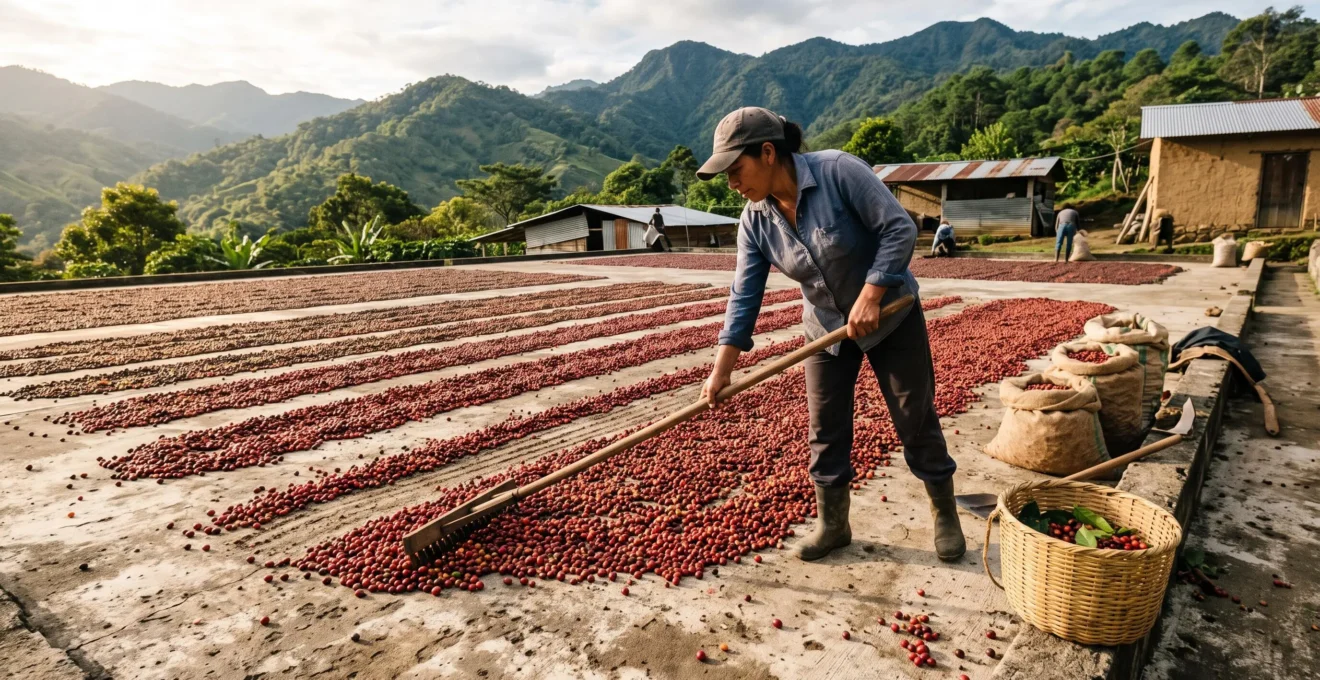
In coffee-growing landscapes, a visitor might encounter loaded collection vehicles, harvesting crews or beans spread across drying patios. These are signs of economic activity, not merely picturesque details. They reveal how rural livelihoods depend on crop conditions, skilled work and access to markets.
Cacao regions offer another perspective. Plantation visits can connect living trees and harvested pods with fermentation, drying, chocolate preparation and the traditions surrounding regional drinks.
The same approach applies beyond these two crops. Markets reflect changing supplies of seasonal produce, while agricultural regions have their own working calendars. Maguey cultivation and mezcal production, for example, involve rhythms that should be understood separately from the annual coffee harvest rather than assumed to follow the same timetable.
This wider perspective also helps avoid an overly simple account of export economics. International trade does influence Mexican agriculture, but so do domestic buyers, producer cooperatives, local food traditions and the growing market for speciality products within Mexico itself.
The best experience is not necessarily obtaining something described as « export-grade ». It may be discovering why a producer sells one lot through a specialist roaster, reserves another for a longstanding customer or processes different harvests for different uses.
A practical travel strategy brings together three decisions: schedule visits around confirmed harvest activity, seek products with credible provenance, and taste traditional preparations alongside speciality versions. Ask where the coffee or cacao was grown, how it was processed and who brings it to the consumer.
These questions transform a cup of coffee, a market purchase or a frothy chocolate drink into an opportunity to understand the people and agricultural decisions behind it.
For your next trip, choose one coffee or cacao-growing region, contact a producer before booking, and arrange a comparison tasting nearby. You will leave with more than a favourite flavour: you will have a clearer understanding of how Mexico’s agricultural landscapes connect to the food and drink served across the country.
Is Mexican coffee better when bought directly from a farm?
Not necessarily. Direct purchases can improve traceability and provide opportunities to understand production, but quality also depends on processing, storage and roasting. A reputable Mexican speciality roaster may offer an equally good or better cup by selecting and preparing beans carefully.
Does organic certification mean Mexican coffee is speciality grade?
No. Organic certification concerns specified production standards, whereas speciality coffee assessment focuses on characteristics such as cup quality and defects. A coffee can be organic without meeting a particular speciality buyer’s requirements, and a highly rated coffee need not be organically certified.
Can you bring roasted Mexican coffee back to the UK?
Pack commercially prepared coffee securely and check the current UK government rules on bringing food into the country before travelling. Requirements can vary by product type and destination within the UK. Green coffee, agricultural planting material and other unprocessed products may raise different considerations from roasted coffee intended for personal consumption.
Can travellers taste cacao straight from the pod?
Some farm experiences may demonstrate freshly opened cacao pods and explain the pulp surrounding the beans. However, raw cacao fruit differs from processed chocolate, and tasting opportunities depend on the operator’s hygiene procedures and available harvest. Ask the guide what is safe and appropriate to sample.
Is a coffee or cacao farm still worth visiting outside harvest season?
Yes, provided expectations are realistic. Off-season tours can explain cultivation, processing equipment, producer economics and chocolate or coffee preparation. However, they may not include active picking or fermentation. Confirm the activities available and decide whether learning about production is sufficient without seeing the harvest itself.